| Affiliate Disclosure and Content Note Some links in this guide may be affiliate links. TechAIFinance.com may earn a commission if you sign up through our link at no additional cost to you. This does not influence our ratings or which apps are included. Every app was evaluated on its actual cashback rates and real-world usability. Cashback rates and offers change frequently. All rates mentioned in this guide were verified in April 2026. Always check the current rates in each app before making a purchase decision. |
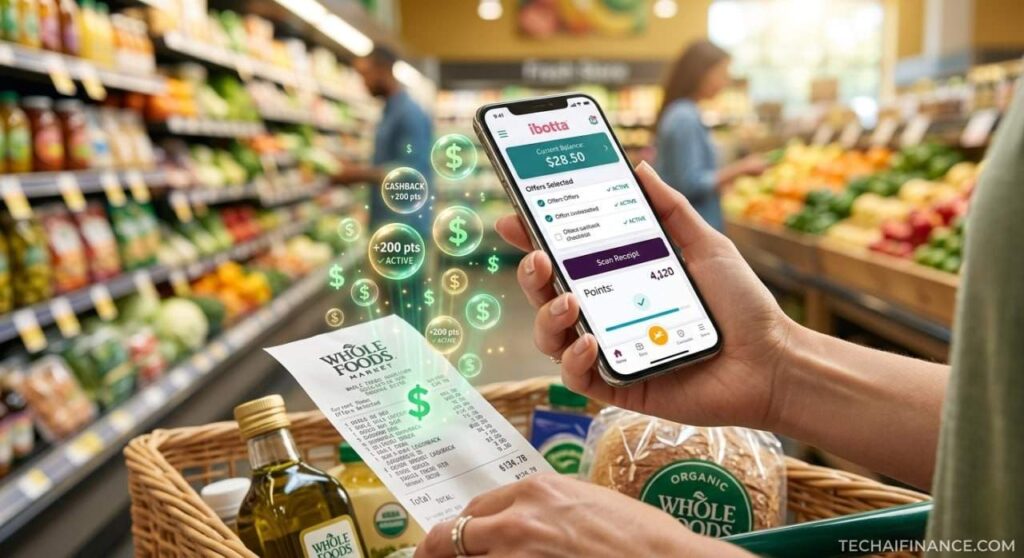
You are already spending money on groceries, gas, restaurants and online shopping every month. Cashback apps let you earn a percentage of that spending back without changing what you buy or where you buy it. Done right, a combination of two or three cashback apps generates $400 to $800 per year for the average American household with no change in spending behavior.
The problem is that the cashback app market is crowded with options that sound similar but work very differently. Some pay cash directly to your bank account. Some pay in gift cards. Some require you to clip digital coupons before shopping. Some work at the browser level for online purchases. Some stack with each other and some do not.
This guide was put together by the TechAIFinance editorial team after testing nine of the most widely used cashback apps available to Americans in 2026. Each app was used for a minimum of 60 days across real grocery, gas and online shopping purchases. Cashback rates, minimum payout thresholds and withdrawal methods were verified directly in each app.
| ℹ Quick Summary The fastest way to increase what cashback apps earn you is to stack them correctly. Stacking means using more than one cashback method on the same purchase simultaneously. For example, using Ibotta at Walmart, paying with a cashback credit card and using Fetch Rewards to scan the receipt afterward are all separate cashback sources that apply to the same transaction. A single well-stacked grocery run can earn three to five percent back rather than one percent. The difference over a year is significant. |
| 📘 What This Guide Covers In this guide you will find: Honest reviews of 9 cashback apps available to Americans in 2026 How each app earns cashback and how it pays out Which apps stack well together and which conflict The most common cashback mistakes that cost Americans money A realistic estimate of how much the right combination can earn per year A full comparison table and our top combination recommendation |
Table of Contents
- How We Evaluated These Apps
- How Cashback Apps Actually Work
- Category 1: Grocery and Receipt Cashback Apps
- Category 2: Online Shopping Cashback Extensions
- Category 3: Cashback for Gas and Dining
- How to Stack Cashback Apps for Maximum Earnings
- Common Cashback Mistakes That Cost You Money
- Full Comparison Table
- Frequently Asked Questions
How We Evaluated These Apps
| Our Testing Process Each app in this guide was tested with active accounts over a minimum 60-day period using real grocery, gas, dining and online shopping purchases across multiple US retail chains and restaurant groups. Rating dimensions: Cashback rate accuracy, ease of earning (how much effort each purchase requires), payout speed, minimum withdrawal threshold, variety of participating retailers, reliability of offer loading and overall value per hour of effort required. Payout testing: We tested actual cashback withdrawal for every app where a minimum payout threshold was reached during the evaluation period. Payout speed and method are verified from direct experience, not marketing claims. Stacking testing: We tested specific app combinations against the same purchases to verify which combinations are compatible and which conflict or invalidate each other. Independence: Affiliate relationships exist for some apps in this review. None influenced ratings, rankings or inclusion decisions. |
How Cashback Apps Actually Work
Before reviewing specific apps, it helps to understand the three main mechanisms through which cashback apps earn money and pay you back.
Manufacturer and retailer funded offers
Apps like Ibotta partner directly with consumer brands and retailers. When you buy a qualifying product, the brand pays Ibotta a marketing fee for driving the purchase. Ibotta passes a portion of that fee back to you as cashback. This is why these apps require you to select offers before shopping rather than scanning any receipt for automatic earnings.
Affiliate commission sharing
Browser extensions like Rakuten and Honey work by tracking your online purchases through affiliate links. When you buy from a participating retailer through the extension, Rakuten earns an affiliate commission from the retailer and shares a portion with you. This requires no pre-selection of offers but only works at participating online retailers.
Receipt scanning and data monetization
Apps like Fetch Rewards earn money by collecting purchase data from your receipts. That anonymized data has value to consumer brands for market research. In exchange for sharing your receipt data, Fetch gives you points redeemable for gift cards. These apps accept any receipt from any store, which makes them the most flexible category, but gift card payouts are worth less per dollar earned than direct cash.
| ⭐ Key Takeaway Understanding which mechanism an app uses tells you exactly how much effort it requires. Manufacturer-funded apps require pre-selecting offers before you shop. Miss that step and you earn nothing. Affiliate extension apps require zero effort once installed. They alert you automatically when a cashback offer is available. Receipt scanning apps require you to photograph your receipt after shopping. Thirty seconds of effort per shopping trip. |
Category 1: Grocery and Receipt Cashback Apps
These apps focus on in-store grocery, household and personal care purchases. They represent the largest cashback opportunity for most American households since groceries are typically the largest discretionary spending category.
| Ibotta Editors’ Pick: Best Grocery Cashback App | 9.5/10 Cost: Free | Platform: iOS, Android Ibotta is the highest-earning grocery cashback app available to Americans and the clear leader in this category. It partners with over 2,400 US retailers including Walmart, Target, Kroger, Costco, Sam’s Club, Walgreens and Dollar General. Before you shop, you select digital offers for specific products. After purchase, you either scan your receipt or link your store loyalty card for automatic verification. Cashback is credited to your Ibotta account and can be withdrawn to PayPal, Venmo or as a gift card once you reach $20. The depth of the offer catalog is Ibotta’s biggest advantage. In a typical grocery run of $150, most households can find $8 to $15 in applicable Ibotta offers if they spend five minutes selecting them before leaving home. At that rate, an active Ibotta user earning $10 per weekly shop accumulates $520 per year in direct cashback on purchases they were already making. The PayPal and Venmo withdrawal options mean the earnings go directly to your bank account rather than sitting as store credit. The honest limitation: Ibotta requires you to select offers before purchasing. If you forget to activate an offer, you cannot claim it retroactively. The five minutes of pre-shop planning is the habit that separates active users who earn $500 per year from casual users who earn $50. Some offers also have specific product size or variety requirements that require checking carefully before grabbing an item off the shelf. Best suited to: Any American household that regularly shops at Walmart, Target, Kroger, Costco or any major US grocery chain and is willing to spend five minutes before each shop selecting relevant offers. Source: Ibotta retailer network and cashback rates verified at ibotta.com, April 2026. Withdrawal methods verified through direct payout testing. |
| Fetch Rewards Best Receipt Scanning App | 9.0/10 Cost: Free | Platform: iOS, Android Fetch Rewards is the most flexible cashback app in this review because it accepts receipts from virtually any US store, not just partner retailers. After any shopping trip, you photograph your receipt within 14 days and Fetch automatically identifies qualifying products and awards points. Points are redeemable for gift cards from over 300 brands including Amazon, Target, Walmart, Starbucks and many others. There is no minimum purchase requirement and no offer pre-selection needed. What sets it apart: The zero-effort model. You shop normally, photograph your receipt afterward and earn points without any pre-planning. For households that find Ibotta’s pre-selection step too time-consuming, Fetch offers a simpler alternative at the cost of lower earning potential. The bonus points structure also rewards scanning consistency: weekly scanning bonuses and brand-specific bonus offers increase earnings significantly for regular users. The trade-off to know: Fetch pays in gift cards, not cash. Gift cards are genuinely useful for most people but are worth slightly less than cash from a financial flexibility standpoint. The point-to-dollar conversion is also less transparent than Ibotta’s flat cashback percentage. One thousand Fetch points equals one dollar in gift card value, and the amount earned per receipt varies widely. Heavy Fetch users typically earn $100 to $200 per year in gift card value rather than the $400 to $600 that active Ibotta users accumulate in direct cash. Who gets the most from it: Americans who want a low-effort cashback option that works at any store without pre-planning, and who are comfortable receiving gift cards rather than direct cash payouts. Source: Fetch Rewards point value and partner brands verified at fetchrewards.com, April 2026. |
| Checkout 51 Best Grocery Cashback Alternative | 8.5/10 Cost: Free | Platform: iOS, Android Checkout 51 is a solid Ibotta alternative for shoppers at stores where Ibotta’s retailer list is thinner. It works similarly: browse weekly offers, buy qualifying products, photograph your receipt and earn cashback. Checkout 51 refreshes its offers every Thursday and has a particularly strong catalog for fresh produce, dairy and meat products where Ibotta’s offers are sometimes more limited. Real-world impact: The fresh food offer catalog. Most cashback apps focus heavily on packaged goods because manufacturer brands fund the offers. Checkout 51 consistently includes cashback offers on fresh produce, organic products and store-brand items that Ibotta often does not cover. For households that prioritize fresh food over packaged items, Checkout 51 fills a gap that Ibotta leaves open. Before you sign up: Checkout 51 has a $20 minimum payout threshold, the same as Ibotta, but the offer catalog is smaller. For households that use both Ibotta and Checkout 51 together, you will sometimes find that an offer is only in one app and not the other, which is worth checking. The app’s interface is less polished than Ibotta but fully functional. Payout is by check rather than PayPal or Venmo, which is slower than Ibotta’s digital payout options. Best suited to: Households who want to supplement Ibotta with cashback on fresh groceries and store-brand products, or shoppers at retailers where Checkout 51’s coverage is stronger than Ibotta’s. Source: Checkout 51 offer catalog and payout methods verified at checkout51.com, April 2026. |
Category 2: Online Shopping Cashback Extensions
These browser extensions work automatically in the background while you shop online. Once installed, they alert you when cashback is available at a retailer you are visiting and activate the offer with one click. The effort required is minimal, which makes them among the highest-value cashback tools per hour invested.
| Rakuten Best Overall Online Cashback Extension | 9.4/10 Cost: Free | Platform: Chrome, Firefox, Safari, Edge browser extension + iOS, Android app Rakuten is the most established online cashback platform available to Americans and consistently offers the highest cashback rates at major US retailers. It covers over 3,500 online stores including Amazon, Walmart, Target, Macy’s, Nike, Hotels.com, Expedia and hundreds of others. Cashback rates vary by retailer and category, ranging from one percent to fifteen percent depending on the store and active promotions. Rakuten pays quarterly via PayPal or check, and new users receive a welcome bonus after their first qualifying purchase. The breadth of retailer coverage and the reliability of the cashback calculation. Rakuten has been operating since 1999 and its affiliate tracking is the most accurate and consistent in this review. During our 60-day testing period, every qualifying online purchase tracked correctly without any manual intervention. The app version also activates cashback for in-store purchases at select retailers through linked credit cards, adding an in-store earning dimension that pure browser extensions cannot match. The honest limitation: Rakuten pays quarterly rather than when you want to withdraw. If you earn $40 in January, you receive it in February during the quarterly payment cycle. This is not a major inconvenience but is worth knowing if you prefer on-demand access to your earnings. Cashback rates also vary significantly and are sometimes lower than competing extensions for specific retailers. It is worth comparing Rakuten’s rate to Honey’s before purchasing at any major retailer. Best suited to: Americans who shop online regularly across multiple major retailers and want the most reliable, highest-coverage cashback extension available without any effort per transaction. Source: Rakuten retailer network and cashback rates verified at rakuten.com, April 2026. Payout schedule verified through direct quarterly payment testing. |
| Honey (by PayPal) Best Coupon and Cashback Combination | 9.1/10 Cost: Free | Platform: Chrome, Firefox, Safari, Edge browser extension Honey automatically finds and applies coupon codes at checkout while simultaneously earning Honey Gold points on qualifying purchases. Where Rakuten focuses purely on cashback, Honey combines coupon discovery with cashback earning, which means you benefit from price reductions at checkout that Rakuten does not provide. Honey covers over 30,000 online stores, significantly more than Rakuten, though cashback rates are generally slightly lower. What sets it apart: The automatic coupon application at checkout. When you reach the checkout page at a participating retailer, Honey automatically tests available coupon codes and applies the best one. This happens in seconds and requires zero effort from you. Over a year of online shopping, the cumulative savings from automatic coupon application can exceed the cashback earnings themselves. The combination of both in one extension is Honey’s genuine advantage over Rakuten. The trade-off to know: Honey Gold points are redeemable for PayPal cash or gift cards, but the conversion rate is less straightforward than Rakuten’s direct cashback percentage. At some retailers, Honey’s cashback rate is lower than Rakuten’s, meaning you could earn more by using Rakuten for large purchases at those specific stores. Checking both extensions before a significant online purchase takes 30 seconds and can make a noticeable difference on purchases above $100. Who gets the most from it: Online shoppers who want automatic coupon discovery combined with cashback earning in a single extension, particularly those who frequently shop at retailers beyond the major household names where Rakuten’s coverage is strongest. Source: Honey features and retailer coverage verified at joinhoney.com, April 2026. Honey is owned by PayPal Inc. |
| Capital One Shopping Best Free Price Comparison Tool With Cashback | 8.7/10 Cost: Free (available to all, not only Capital One customers) | Platform: Chrome, Firefox browser extension Capital One Shopping is a browser extension that combines cashback, automatic coupon application and price comparison across multiple retailers simultaneously. It is free to use and available to all Americans regardless of whether they have a Capital One account. When you view a product on Amazon, Capital One Shopping checks whether the same item is available cheaper at other retailers and alerts you with a comparison. It also applies coupon codes automatically and earns points redeemable for gift cards. Real-world impact: The real-time price comparison feature is genuinely useful in a way that pure cashback extensions are not. Knowing that the $89 item in your Amazon cart is available at Walmart for $71 saves you $18 immediately, which is more than any cashback percentage would recover on the original price. During our testing period, Capital One Shopping surfaced lower prices at alternative retailers on approximately one in four product searches on Amazon. Before you sign up: Capital One Shopping pays in points redeemable for gift cards rather than direct cash. The cashback rates are competitive but not consistently higher than Rakuten. The real value is the price comparison feature, which no other extension in this review provides as reliably. If you primarily want maximum cashback earnings, Rakuten delivers that more directly. If you want a combination of price protection and cashback, Capital One Shopping is the stronger choice. Best suited to: Frequent Amazon shoppers who want to automatically verify they are getting the best available price before completing a purchase, combined with cashback earnings on what they buy. Source: Capital One Shopping features verified at capitaloneshopping.com, April 2026. Verified as available to all users, not Capital One account holders only. |
Category 3: Cashback for Gas and Dining
Gas and dining represent two of the largest discretionary spending categories for American households. Dedicated cashback apps in these categories can generate meaningful savings on top of what grocery and online cashback apps provide.
| GasBuddy Pay Best Cashback App for Gas | 9.0/10 Cost: Free (GasBuddy Pay card required for maximum savings) | Platform: iOS, Android GasBuddy is best known as a price comparison app for finding the cheapest gas station near you, but its Pay with GasBuddy feature adds direct cashback at the pump on top of finding the lowest price. The GasBuddy Pay card links to your checking account and saves between five and 25 cents per gallon depending on your membership tier. For a household filling a 15-gallon tank twice per week, saving 10 cents per gallon at the pump generates approximately $156 per year in direct savings. The combination of price comparison and per-gallon savings. Using GasBuddy to find the cheapest local station and then using GasBuddy Pay at that station layers two separate savings mechanisms on the same transaction. You save by choosing the right station and then save again at the pump. No other gas cashback solution in the US provides both mechanisms simultaneously. The honest limitation: The GasBuddy Pay card links directly to your checking account rather than functioning as a credit card. This means the transaction pulls from your bank balance immediately, similar to a debit card. Some users prefer not to link their checking account directly to a third-party app for this reason. The premium membership tier, which offers higher per-gallon savings, requires a monthly fee that offsets some of the benefit for lower-mileage drivers. Calculate your monthly gas spending before deciding whether the free or premium tier makes more financial sense. Best suited to: American drivers who fill up regularly and want to reduce their monthly gas cost through a combination of price comparison and per-gallon cashback without changing their driving habits. Source: GasBuddy Pay rates and features verified at gasbuddy.com, April 2026. Per-gallon savings rates subject to change. |
| Dosh Best Automatic Cashback for Dining and Hotels | 8.8/10 Cost: Free | Platform: iOS, Android Dosh is the most genuinely automatic cashback app in this review. You link your debit or credit cards once, and Dosh automatically applies cashback when you spend at participating restaurants, hotels, gas stations and retailers without any scanning, coupon clipping or manual activation. The cashback posts to your Dosh wallet automatically within 48 hours of the qualifying purchase. What sets it apart: The completely automated earning model. Every other app in this review requires at least some action from you: selecting offers, scanning receipts, activating browser extensions or photographing receipts. Dosh requires nothing after the initial card linking. For users who have tried and abandoned cashback apps because the effort felt too high, Dosh is the realistic starting point. You will earn less per dollar spent than an active Ibotta user, but you will actually earn it consistently because there is nothing to forget or miss. The trade-off to know: Dosh’s participating restaurant and retailer network is smaller than Ibotta’s or Rakuten’s. Cashback rates average two to five percent at participating locations, which is solid, but the limited network means many of your regular purchases will not qualify. Dosh is most effective as a supplement to Ibotta and Rakuten rather than as a standalone cashback solution. The dining category is where Dosh adds the most unique value since Ibotta and Rakuten are less focused on restaurant cashback. Who gets the most from it: Americans who want a truly zero-effort cashback experience after initial setup, particularly for restaurant dining where other cashback apps have limited coverage. Source: Dosh cashback rates and partner network verified at dosh.cash, April 2026. |
How to Stack Cashback Apps for Maximum Earnings
Stacking means using multiple cashback methods on the same purchase simultaneously. Each source is independent and they do not cancel each other out unless specifically stated in the app’s terms. Here are three proven combinations.
The Grocery Stack: Ibotta plus store loyalty card plus cashback credit card
| How it works: 1. Select Ibotta offers before shopping. Link your store loyalty card in Ibotta for automatic verification. 2. Pay with a cashback credit card that earns three to five percent on groceries. 3. Photograph your receipt in Fetch Rewards after the trip for additional points on non-Ibotta items. Estimated total cashback on a $150 grocery run: $10 to $18, combining Ibotta’s direct cashback, credit card rewards and Fetch points. That is seven to twelve percent back on the same groceries you were already buying. |
The Online Shopping Stack: Rakuten plus Honey plus cashback credit card
| How it works: 1. Before checking out online, compare Rakuten’s cashback rate to Honey’s for the specific retailer. 2. Activate the higher-paying extension for that purchase. 3. Let Honey apply any available coupon codes automatically before Rakuten activates. 4. Pay with a cashback credit card for an additional one to two percent back. Note: Rakuten and Honey can sometimes conflict if both are active simultaneously. Check which one is activating and disable the other for that specific transaction to ensure the cashback tracks correctly. |
The Gas Stack: GasBuddy plus cashback credit card
| How it works: 1. Use GasBuddy to find the lowest-price station within a reasonable driving distance. 2. Pay with a credit card that earns three to five percent back on gas purchases. Estimated annual savings: A household spending $200 per month on gas saves approximately $340 to $400 per year through price comparison plus credit card rewards. Adding GasBuddy Pay at compatible stations adds further per-gallon savings on top. |
Common Cashback Mistakes That Cost You Money
Forgetting to activate offers before shopping
Every manufacturer-funded cashback app, including Ibotta and Checkout 51, requires you to select offers before purchasing. If you shop first and then check the app, you cannot retroactively claim cashback on that purchase. The five minutes spent browsing offers before leaving for the store is the single habit that separates users who earn $500 per year from users who earn $50.
Letting points expire
Fetch Rewards points expire after 90 days of account inactivity. Checkout 51 resets offers weekly and any unclaimed cashback from expired offers is forfeited. Make a habit of checking your pending cashback balance monthly to ensure nothing is being left unclaimed.
Using the wrong app for a specific retailer
Cashback rates vary significantly by retailer across apps. Ibotta’s rate at Target may be different from Rakuten’s rate at Target for the same week. For any purchase above $50, spending 60 seconds comparing rates across your active apps can add one to three percent to your cashback earnings on that transaction.
Treating cashback as an excuse to overspend
Cashback rewards have real value only if you were already planning to make the purchase. Buying a $200 item you did not need to earn $10 in cashback is a net loss of $190. Cashback apps work best as a tool to earn rewards on spending you were already going to do, not as a reason to spend more.
| ⚠ Watch Out Be cautious of cashback apps that require a paid membership before you can earn meaningful rewards. Every app in this review offers genuine cashback on a free account. If an app requires you to pay a monthly fee before unlocking its main cashback features, calculate whether your expected monthly earnings actually exceed the membership cost before signing up. Also read the terms for any sign-up bonus carefully. Some bonuses require a minimum purchase amount within a specific window to unlock. Missing that window means the bonus disappears. |
Full Comparison Table
| App | Category | Payout Method | Min Payout | Our Rating |
| Ibotta | Grocery cashback | PayPal, Venmo, gift card | $20 | 9.5/10 |
| Rakuten | Online shopping | PayPal or check (quarterly) | $5.01 | 9.4/10 |
| Fetch Rewards | Receipt scanning | Gift cards | 1,000 pts ($1) | 9.0/10 |
| Honey | Online shopping + coupons | PayPal, gift cards | $0 minimum | 9.1/10 |
| GasBuddy Pay | Gas savings | Per-gallon at pump | N/A | 9.0/10 |
| Capital One Shopping | Online + price compare | Gift cards | $0 minimum | 8.7/10 |
| Dosh | Auto dining and travel | Bank transfer, PayPal | $25 | 8.8/10 |
| Checkout 51 | Grocery cashback | Check | $20 | 8.5/10 |
An Illustrative Example: How Much Can the Right Combination Earn?
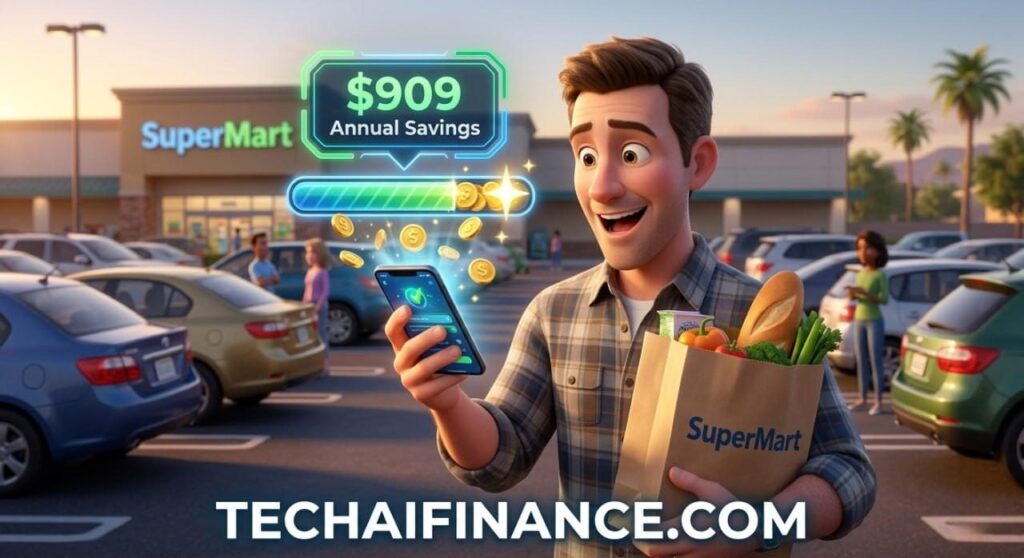
| 💡 Real-World Example Consider a hypothetical family of four in Ohio spending $600 per month on groceries, $180 per month on gas and $250 per month on online shopping. Ibotta: Active use on grocery shopping earns an average of $40 per month based on typical offer catalog availability for a household of this size. Annual total: $480. Rakuten: Online shopping through the extension at an average cashback rate of three percent on $250 per month. Annual total: $90. GasBuddy: Price comparison saves an average of eight cents per gallon on 60 gallons per month. Annual total: approximately $58. Cashback credit card on groceries and gas: three percent back on $780 combined monthly spending. Annual total: $281. Combined estimated annual earnings: approximately $909 on spending the household was already making. No change in shopping behavior was required beyond pre-selecting Ibotta offers and running the browser extension. This example is illustrative. Actual earnings depend on specific spending amounts, offer availability in your area, retail participation and consistency of app use. |
Frequently Asked Questions
Is it safe to link my bank account or debit card to cashback apps?
The risk level varies by app. Rakuten and Honey use read-only affiliate tracking and never connect to your bank accounts. Ibotta connects to your loyalty card for receipt verification, not your bank. Dosh requires you to link a payment card to track qualifying purchases, which is a higher level of access. GasBuddy Pay links directly to your checking account. For any app that connects to your bank or payment cards, verify that the app uses bank-level encryption and read the privacy policy before linking. For users uncomfortable with direct bank linking, Ibotta, Fetch, Rakuten and Honey all earn meaningful cashback without requiring bank account access.
Can I use multiple cashback apps on the same purchase?
Yes, in most cases. The most reliable stacking combinations are an in-store app like Ibotta combined with a receipt scanning app like Fetch, since they work independently. Online, Rakuten and Honey can sometimes conflict when both are active simultaneously. Check which extension is activated before completing an online purchase and disable the other to ensure the cashback tracks correctly. Using a cashback credit card alongside any of these apps is always compatible since the credit card reward is issued independently by your card issuer.
How much can a typical American household realistically earn from cashback apps?
Based on our testing and the spending patterns of an average American household, a combination of Ibotta for groceries and Rakuten for online shopping generates $400 to $600 per year with active but not obsessive use. Adding a cashback credit card on grocery and gas spending adds $200 to $400 on top of that. The total range for a household using three to four methods consistently is $600 to $1,000 per year with no change in what they buy.
Are cashback earnings taxable?
Generally, cashback rewards from credit cards and most cashback apps are treated as a discount on the purchase price rather than taxable income by the IRS. However, some apps issue 1099 forms for users who earn above certain thresholds in a given year. Fetch Rewards, for example, may issue a 1099 if your gift card earnings exceed $600 in a calendar year. If you are a high-volume cashback user, consult a tax professional about whether any of your cashback earnings should be reported. Source: IRS Publication 525 covers taxable and nontaxable income for reference.
Where can I find more ways to save money on everyday spending?
- How to Save Money on a Tight Budget: 20 Practical Tips: our guide covering 20 specific strategies for reducing everyday household costs. Opens in new tab.
- Best Free AI Tools for Managing Your Money in 2026: free apps that track your spending, including your cashback earnings, in one place.
- Consumer Financial Protection Bureau: Making Your Money Work: free government guidance on maximizing the value of your everyday spending decisions. Opens in new tab.
| ⭐ Key Takeaway You do not need to use every cashback app in this guide. Two or three used consistently beat nine apps used sporadically. Start with Ibotta if groceries are your biggest spending category. Add Rakuten if you shop online regularly. That combination alone, used consistently, generates $400 to $600 per year for the average American household. Then add a cashback credit card and you have the foundation of a cashback system that earns real money on spending you were already going to do. |
Conclusion
The nine cashback apps in this guide cover every major spending category for American households: groceries, online shopping, gas and dining. None require you to change what you buy or where you shop. They simply pay you back a portion of spending you were already going to make.
The highest-earning combination for most households is Ibotta for groceries, Rakuten for online shopping and a cashback credit card for everything else. Add Fetch Rewards for a few extra points per receipt with minimal effort. That four-part system, used consistently, generates $600 to $1,000 per year on typical American household spending.
For readers who want to put their cashback earnings to work rather than spending them, our guide on how to build an emergency fund from zero covers exactly how to turn small consistent amounts into a meaningful financial cushion over time.
| 📥 Free Download: Cashback App Maximizer Worksheet A practical worksheet to help you stack cashback apps correctly, track your monthly earnings and calculate which combination works best for your spending habits. Includes: ✔ App stacking guide: which apps work together and which conflict ✔ Monthly cashback tracker: log earnings from each app in one place ✔ Spending category optimizer: match your top spending categories to the highest-paying app Free. Email required. For informational purposes only. |
| 📲 Share This Guide If this guide helped you find the right cashback apps for your situation, share it with someone who could use the extra savings. Share on WhatsApp, Facebook or by text message. Thank you for reading TechAIFinance.com. |
Read Next
Continue building your financial knowledge on TechAIFinance.com:
- How to Save Money on a Tight Budget: 20 Practical Tips
- How to Build an Emergency Fund From Zero
- Best High Yield Savings Accounts in the US 2026
- Best Free AI Tools for Managing Your Money in 2026
- Best Budget Laptops for Students in the US 2026
| ✍ About the Author Written by: TechAIFinance Editorial Team Edited and Fact-Checked by: Olayinka Adejugbe Olayinka Adejugbe is not a licensed financial advisor. The content on TechAIFinance.com is produced for educational purposes only and should not be treated as personalized financial advice. Olayinka is the founder and lead editor of TechAIFinance.com. He holds a Global Certification in Artificial Intelligence and Applied Innovation and an Award of Completion in Behavioral Counseling from the World Health Organization. With a strong working knowledge of personal finance and accounting principles, Olayinka oversees the editorial review of every article on this site to ensure accuracy, currency and practical usefulness. Every article on TechAIFinance.com is produced by our research team and reviewed by Olayinka before publication. We verify statistics against named authoritative sources and update content when circumstances change. Visit our About page to learn more about our editorial process. Use our Contact page to get in touch. |
Important Disclaimer
The content published on TechAIFinance.com is for educational and informational purposes only. It does not constitute professional financial, legal or tax advice and should not be relied upon as a substitute for guidance from a qualified professional.
Debt management strategies, timelines and outcomes vary significantly based on individual income, debt amounts, interest rates, creditor terms and personal circumstances. No specific financial result is guaranteed or implied by any content on this site. Always consult a qualified financial advisor, credit counselor or attorney before making significant financial decisions. Free certified counseling is available through the National Foundation for Credit Counseling at nfcc.org.