| Disclosure and Content Note This guide provides information about gig economy apps available to Americans in 2026. It is not financial or employment advice. Gig income varies significantly based on location, hours worked, vehicle condition, market demand and individual effort. Some links may be affiliate links. TechAIFinance.com may earn a small commission if you sign up through our link at no additional cost to you. This does not influence which apps are reviewed or how they are rated. All pay rates, app features and availability were verified in April 2026. Gig platforms update their pay structures frequently. Always verify current rates in the app itself before making decisions based on figures in this guide. |
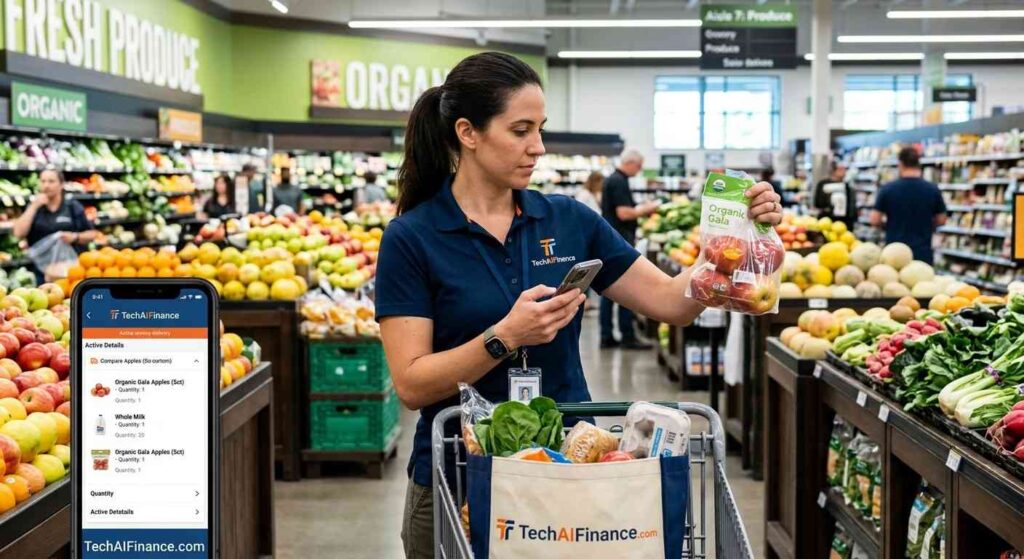
The gig economy in 2026 is not what it was five years ago. It is more competitive on some platforms, more sophisticated on others and genuinely more rewarding for workers who understand how to choose the right apps for their specific situation. The Americans who earn well from gig work are not the ones who signed up for the first app they heard of. They are the ones who understand exactly how each platform calculates pay, which hours and locations produce the best results and how to stack multiple apps strategically to maximize income per hour actually worked.
This guide reviews 22 gig economy apps available to Americans in 2026 with the same level of honest detail that you would get from a friend who has tried all of them. That means explaining exactly how each app pays, what the real hourly rate looks like after expenses, which markets and time slots produce the best results and what most people do not find out until they have already wasted several weeks on an app that was never going to work for their situation.
The apps in this guide span five categories: delivery and food courier apps, rideshare and transportation apps, task and errand apps, skilled service apps and passive income apps. Each category suits different schedules, assets and skills. A parent who needs flexible weekend hours has completely different best options from a retired professional looking for supplemental income or a college student with a reliable car.
This guide was written by Olayinka Adejugbe, founder of TechAIFinance.com and holder of a Global Certification in Artificial Intelligence and Applied Innovation. Every app reviewed was evaluated on its verified pay structure, honest earning potential for a new worker in an average US market and specific guidance on how to maximize results.
| ℹ Quick Summary The US gig economy in 2026: key facts An estimated 73 million Americans participate in gig work in some capacity as of 2026, per Statista research. The average American gig worker earns between $14 and $25 per hour gross before expenses, per Gridwise platform earnings data 2025. After accounting for vehicle wear, fuel, insurance and self-employment taxes, true net earnings for delivery and rideshare workers average $10 to $18 per hour in most US markets. Gig workers who use three or more apps simultaneously earn on average 34 percent more per working hour than those who use a single app exclusively, per Gridwise 2025 multi-apping data. The most financially rewarding gig categories in 2026 for Americans without specialized skills are grocery delivery, marketplace tasks and pet care. Sources: Statista Gig Economy Report 2026. Gridwise Driver Earnings Benchmark Report 2025. |
| 📘 What This Guide Covers In this guide you will find: Full reviews of 22 gig economy apps across five categories Honest pay breakdowns including what apps advertise versus what workers actually earn The specific hours, locations and strategies that produce the highest earnings on each app Which apps work well together and can be used simultaneously The real tax and expense picture for gig workers that most guides skip A complete comparison table and our recommended combinations by goal and schedule |
Table of Contents
- How We Evaluated These Apps
- The Truth About Gig Economy Pay: What the Apps Advertise vs. What Workers Earn
- Category 1: Food and Grocery Delivery Apps
- Category 2: Rideshare and Transportation Apps
- Category 3: Task and Errand Apps
- Category 4: Skilled Service Apps
- Category 5: Passive and Low-Effort Income Apps
- How to Stack Multiple Apps for Maximum Income
- The Gig Worker Tax Guide: What You Must Know
- Full App Comparison Table
- Recommended App Combinations by Schedule and Goal
- Frequently Asked Questions
How We Evaluated These Apps
| Our Evaluation Process Each app was evaluated on six criteria: verified pay structure with transparent calculation, worker feedback from Glassdoor, Reddit driver and worker communities and platform-specific forums, availability across US states, realistic hourly earnings for a worker in an average mid-size US market, quality of support and dispute resolution, and additional earning opportunities beyond base pay such as bonuses, tips and referrals. Pay verification: We cross-referenced app-published pay rates against worker-reported earnings in community forums, Glassdoor gig worker surveys and the Gridwise 2025 Driver Earnings Benchmark Report. Where significant discrepancies existed between advertised and reported earnings, we noted them explicitly in the honest truth section of each review. Expense accounting: All earning figures cited in this guide are gross before expenses unless explicitly noted otherwise. Net earnings after fuel, vehicle wear, insurance and taxes are discussed in the tax section and in the honest truth section of relevant apps. Independence: No app paid for inclusion or favorable placement in this guide. Some apps have affiliate programs through which TechAIFinance.com may earn a commission. This did not influence ratings or placement. |
The Truth About Gig Economy Pay: What the Apps Advertise vs. What Workers Earn
Before reviewing any individual app, it is important to address the gap between what gig economy platforms advertise in their recruitment materials and what workers actually take home. This gap is not always deceptive, but it is consistently misleading because platforms advertise top earner numbers or gross earnings figures without factoring in the costs that every gig worker bears.
What the apps count as earnings
Every gig platform reports your gross earnings, meaning the total amount paid to you before any deductions. This figure does not subtract the cost of the fuel you burned making the delivery. It does not subtract the accelerated depreciation on your car from the extra miles you drove. It does not subtract the additional insurance cost of using your vehicle for commercial purposes. It does not subtract your self-employment tax obligation, which is 15.3 percent of net self-employment income plus your regular income tax rate on top of that.
What workers actually keep
For delivery and rideshare workers who drive their own vehicle, the IRS standard mileage deduction for 2026 is 70 cents per mile. A delivery driver covering 200 miles in a work session has $140 in deductible vehicle expenses before accounting for fuel costs beyond the mileage deduction. Gridwise’s 2025 benchmark data found that the average delivery app worker in the US earns approximately $18.50 per hour gross and approximately $13.20 per hour after accounting for vehicle expenses but before income taxes. After a 25 percent effective tax rate on self-employment income, net take-home drops to approximately $9.90 per hour.
This does not mean gig work is not worth doing. It means you need to understand what you are actually earning per hour before deciding whether an app is worth your time. The comparison table at the end of this guide includes estimated net earnings after expenses for each app category to give you a realistic baseline.
| ⚠ Watch Out The most financially damaging mistake gig workers make is not tracking their expenses. If you work 20 hours per week on delivery apps and earn $370 gross but spend $140 on fuel and absorb $80 in vehicle wear, your gross hourly rate of $18.50 is actually a net rate of $7.50 per hour before taxes. Track every mile you drive for gig work using an app like MileIQ or Everlance. Track every gas purchase. Download the Gridwise app for free to automatically track your earnings and expenses across multiple platforms in one dashboard. You cannot manage what you do not measure. |
Category 1: Food and Grocery Delivery Apps
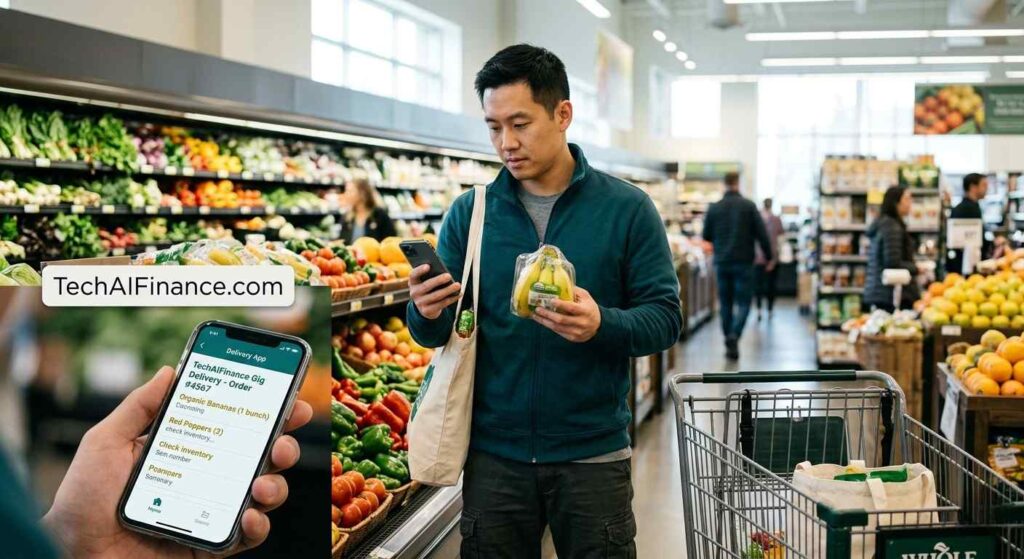
Food and grocery delivery is the most accessible entry point into gig work for Americans with a reliable vehicle. There are no formal interviews, most apps approve new drivers within 24 to 72 hours and you can start earning on your first day. The tradeoff is that these apps have the thinnest margins of any gig category after vehicle expenses, and the most saturated markets in large cities mean lower earnings per hour than workers in mid-size markets typically experience.
| DoorDash Most Widely Available Food Delivery App in the US Category: Food and grocery delivery | Earning Range: $15 to $25 per hour gross | $9 to $16 per hour after vehicle expenses Available In: All 50 states, 4,000+ US cities | Our Rating: 9.2/10 What this app is DoorDash is the largest food delivery platform in the United States by market share, operating in over 4,000 cities across all 50 states. As a DoorDash driver, called a Dasher, you use the DoorDash app to receive and complete delivery requests from restaurants and grocery stores to customers. You work entirely on your own schedule with no minimum hours requirement and the freedom to log on and off whenever you want. How it actually works After downloading the Dasher app and completing a background check, which typically takes one to three business days, you set up your Dasher profile and enter a Dash Now or schedule a dash for a specific time and location. When you are active, the app shows you available delivery orders. Each order displays the pickup location, the drop-off location, the estimated travel time and the total payout before you accept or decline. You pick up the order from the restaurant, confirm pickup in the app, deliver to the customer and confirm delivery. Payment is transferred to your bank account weekly or instantly through DasherDirect for a fee. How the pay is calculated DoorDash pays a base rate for each delivery determined by a formula that accounts for estimated distance, time and desirability of the order. On top of the base rate, customers can add a tip in the app before and after delivery. DoorDash also runs Peak Pay promotions during busy periods like Friday and Saturday evenings and lunch hours, adding $1 to $4 extra per delivery during those times. The total pay per delivery for a standard restaurant order in most markets ranges from $3.50 to $8 before tips. Tips average $3 to $5 per order, bringing typical per-delivery earnings to $6.50 to $13. The honest truth about earnings DoorDash’s market saturation in large cities like New York, Los Angeles and Chicago means more Dashers competing for the same orders, resulting in lower earnings per hour than in mid-size markets like Columbus, Raleigh or Salt Lake City. In oversaturated markets, Dashers report earning $12 to $16 per hour gross during peak hours and as low as $8 to $10 gross during slow periods. In less competitive markets, peak hours regularly produce $18 to $25 gross. The advertised figure of earning up to $25 per hour is achievable but represents top earners in favorable market conditions, not the average. How to maximize your earnings: Dash during peak hours only: Friday dinner, Saturday all day, Sunday brunch and lunch. Decline orders where the payout plus expected tip does not justify the distance. Use the Dasher app’s schedule feature to reserve high-demand time slots in your market before they fill up. Use DoorDash alongside a second delivery app, particularly Instacart or Uber Eats, so that when DoorDash is slow you can switch seamlessly without idle time. Best for: Americans with a reliable car, scooter or bicycle in any US city who want flexible supplemental income with no minimum hour commitments and same-day pay access. Source: DoorDash Dasher app and pay structure verified at dasherapp.com, April 2026. Gridwise Driver Earnings Benchmark Report 2025 for market comparison data. |
| Instacart Best Grocery Delivery App for Higher Per-Order Earnings Category: Grocery and retail delivery and shopping | Earning Range: $17 to $28 per hour gross | $11 to $18 per hour after expenses Available In: Available across most major US metropolitan areas | Our Rating: 9.3/10 What this app is Instacart connects shoppers with customers who want their groceries and household items delivered without going to the store. As an Instacart shopper, you shop for customer orders inside grocery stores, confirm each item in the app, check out and either deliver the items to the customer’s home or hand them off to a separate delivery driver if you have selected the in-store-only shopper role. The in-store shopper role does not require a car. The full-service shopper role, which combines shopping and delivery, requires a vehicle and produces higher earnings. How it actually works Download the Instacart Shopper app, complete the application and a background check, and receive an Instacart payment card in the mail within five to seven business days. This payment card is used to pay for customer orders at the store checkout. Once you receive your card, you can begin accepting batch orders through the app. Each batch shows you the number of items, the stores involved, the estimated shopping and delivery time, the base pay and any existing tip amount added by the customer. You accept or decline based on your judgment of the opportunity. After completing the batch, payment is available through instant cashout to your bank or weekly transfer. How the pay is calculated Instacart pays a base rate per batch calculated from a formula involving the number of items, the weight of heavy items, estimated travel distance and market conditions. Tips make up a significant portion of total earnings on Instacart: customer tips average $5 to $15 per batch and are clearly displayed when you accept the order. Peak Boost promotions add additional pay during high-demand periods. Instacart shoppers who handle large orders with many items, particularly bulk orders from warehouse stores like Costco, often earn $25 to $50 per batch from a combination of base pay and tips. The honest truth about earnings Instacart earnings are more variable than DoorDash earnings because batch size and item count vary enormously. A small 15-item order from a local grocery store might pay $12 to $18 total. A 60-item Costco order might pay $35 to $55 total. The most experienced Instacart shoppers learn to identify high-value batches and decline low-value ones quickly, which requires practice and familiarity with your local store layouts. Shopping speed, the time it takes you to find items in an unfamiliar store layout, significantly affects your effective hourly rate in the first weeks before you become familiar with your regular stores. How to maximize your earnings: Become deeply familiar with the layout of your two or three busiest local stores so you can shop orders faster than average. Accept batches with higher item counts when tips are visible, since tip percentage tends to be higher on larger orders. Keep your replacement rate low by confirming substitutions with customers through the app chat before making them. A high customer satisfaction rating improves the quality and frequency of batches the algorithm shows you. Best for: Americans who want grocery delivery work with above-average tips and who do not mind the physical activity of shopping and carrying grocery items, particularly those in markets near Costco, Whole Foods and other premium grocery stores where order values and tips tend to be higher. Source: Instacart Shopper app and pay structure verified at instacart.com/shoppers, April 2026. Reddit Instacart shopper community earnings reports. |
| Uber Eats Best Delivery App for Combining With Rideshare Category: Food delivery | Earning Range: $14 to $22 per hour gross | $9 to $15 per hour after vehicle expenses Available In: All 50 states, available in 6,000+ cities worldwide with strong US coverage | Our Rating: 8.9/10 What this app is Uber Eats is the food delivery arm of the Uber platform, allowing drivers to switch between delivering food and giving rides within a single app. This dual functionality makes Uber Eats particularly valuable for workers who want to maximize earnings per online hour by accepting whichever type of request, food delivery or passenger ride, produces the best payout at any given moment. Uber Eats covers a wide range of restaurant partners and also handles delivery for select grocery and convenience stores in participating markets. How it actually works If you are already registered as an Uber driver, enabling Uber Eats delivery is a simple toggle in your Uber Driver app settings. If you are new to the platform, complete the Uber driver application including background check, vehicle inspection and document upload, then activate the Eats delivery option. Once online, you receive delivery requests in the same app interface you would use for rideshare. Each request shows the restaurant, the drop-off location, the estimated trip time and the payout. The combination of food delivery and rideshare in one app means your idle time between requests is shorter than on a single-service app. How the pay is calculated Uber Eats pays a base fare for each delivery calculated from a formula that considers the pickup distance from the restaurant, the drop-off distance and time, surge pricing during busy periods and any promotional boosts running in your market. Tips are available from customers both in-app before delivery and through the app for a period after delivery. Uber Eats also runs Quests and Boosts: Quests pay you a bonus for completing a certain number of deliveries in a time period, and Boosts increase your earnings multiplier during specific hours in specific zones. The honest truth about earnings Uber Eats earnings in large urban markets are competitive but heavily dependent on time slot and location. Workers in suburban areas surrounding major cities often earn more per hour than those in city centers where restaurant density is high but so is driver density. The key operational advantage of Uber Eats over DoorDash specifically is the ability to switch to rideshare when food delivery demand is low, which reduces idle time and increases total earnings per hour online significantly. Workers who use Uber Eats purely for food delivery without activating rideshare are leaving a meaningful income opportunity unused. How to maximize your earnings: Activate both food delivery and rideshare in your Uber Driver app so you can switch between them based on demand. Use Uber’s earnings insights feature to identify the highest-earning zones in your market and position yourself there during peak hours. Keep your acceptance rate above the threshold required to maintain access to Uber Pro rewards, which provide fuel discounts and other benefits that reduce operating costs. Best for: Americans who want maximum flexibility between food delivery and passenger rideshare income within a single platform, particularly those in markets where both Uber Eats and UberX demand are strong. Source: Uber Eats driver pay structure verified at uber.com/us/en/drive/delivery, April 2026. |
| Gopuff Best Delivery App for Speed and Consistent Shift-Based Work Category: Convenience and grocery delivery from Gopuff warehouses | Earning Range: $16 to $23 per hour gross | $10 to $15 per hour after expenses Available In: Available in 1,000+ US cities across 48 states | Our Rating: 8.7/10 What this app is Gopuff is a rapid delivery service that operates its own network of micro-fulfillment centers stocked with convenience items, snacks, beverages, household essentials, baby products, over-the-counter medicines and alcohol in markets where licensed. Unlike DoorDash or Uber Eats where you travel to restaurants, Gopuff drivers pick up orders from a fixed Gopuff warehouse location and deliver them to customers within a defined radius. This warehouse-based model produces shorter, more predictable delivery routes than restaurant-to-customer delivery. How it actually works Apply through the Gopuff driver app and complete a background check. Once approved, you schedule shifts at your nearest Gopuff fulfillment center. At the start of your shift, you report to the warehouse, pick up prepared orders with items already bagged and labeled by warehouse staff, and complete deliveries within the designated service area. Because items are pre-staged by warehouse workers, your job is purely delivery rather than shopping and packing, which makes each order faster to complete than comparable grocery delivery tasks. How the pay is calculated Gopuff pays a per-order base rate plus a guaranteed hourly minimum in most markets during scheduled shifts. The per-order rate is lower than food delivery apps because orders are typically smaller convenience purchases rather than full restaurant meals, but the guaranteed hourly floor protects your earnings during slow periods within a shift. Tips are also available and tend to be smaller than restaurant delivery tips because average order values are lower. In markets where Gopuff operates with high volume, drivers report consistent earnings of $16 to $22 per hour during scheduled shifts. The honest truth about earnings Gopuff’s geographic coverage is smaller than DoorDash or Uber Eats, and not every US city has a Gopuff fulfillment center. The app is most valuable in the mid-size and large cities where it operates densely. The shift-based model is a structural advantage if you prefer a defined schedule with a minimum earnings floor rather than the open-ended variability of on-demand delivery apps. However, it means less flexibility than apps where you can log on and off at any moment. How to maximize your earnings: Schedule your shifts during evening and weekend hours when Gopuff order volume is highest and the guaranteed hourly floor is most likely to be supplemented by strong per-order earnings. Maintain high customer ratings to maintain priority access to the best shift times in competitive markets. Best for: Americans who prefer predictable shift-based gig work over fully on-demand scheduling, particularly those in markets where a Gopuff fulfillment center is conveniently located relative to their home. Source: Gopuff driver requirements and pay model verified at gopuff.com/go/driver, April 2026. |
| Shipt Best Grocery Delivery App for Building Regular Customer Relationships Category: Grocery delivery primarily for Target and other retail partners | Earning Range: $18 to $30 per hour gross | $12 to $20 per hour after expenses Available In: Available across most major US metropolitan areas and growing | Our Rating: 9.1/10 What this app is Shipt is a grocery delivery service owned by Target that connects shoppers with customers for same-day grocery and household delivery from Target stores and other retail partners including Meijer, H-E-B and Winn-Dixie in participating markets. Shipt shoppers apply through the Shipt Shopper app, complete a background check and once approved can access and accept delivery orders from their local Shipt marketplace. Shipt is particularly well-regarded among gig shoppers for its tip culture and the opportunity to build relationships with regular customers who specifically request the same shopper for recurring orders. How it actually works Download the Shipt Shopper app and submit your application. Approval typically takes three to five business days including background check processing. Once approved, you browse available orders in your market, accept the ones that match your availability and skill level, shop for items in the partner store, check out using the Shipt payment card provided to you and deliver to the customer’s address. Customers can rate their shoppers and add preferred shoppers to their accounts, which means excellent service creates a pipeline of repeat orders that do not require competing in the general order pool. How the pay is calculated Shipt pays shoppers based on a formula that factors in the number of items ordered, the estimated shopping and delivery time, the retailer and the distance involved. Base pay for a standard 30-item Target order typically ranges from $12 to $20. Tips are a significant component of total earnings on Shipt: the platform actively encourages tipping and customers tend to tip generously on grocery orders, with average tips of $8 to $20 per order. Shoppers who build a roster of preferred customers report reliably earning $22 to $30 per hour because preferred orders are higher quality and repeat customers tip more consistently than first-time customers. The honest truth about earnings Shipt earnings have a wider range than other delivery apps because they depend heavily on whether you have built a preferred customer roster. New Shipt shoppers without preferred customers earn from the general pool, which is competitive. Shoppers who have been on the platform for three months and have accumulated strong ratings and preferred customers earn significantly more per hour than the general pool average. Shipt is therefore a slow-build platform where the investment in excellent service during the first months pays compound dividends through preferred customer relationships. How to maximize your earnings: Deliver exceptional service consistently in your first month to maximize your chances of customers adding you as a preferred shopper. Communicate proactively during every shop, messaging customers about substitutions before making them and sending a confirmation when you are on the way. These small communication habits significantly increase tip amounts and preferred shopper requests compared to shoppers who complete orders silently. Best for: Americans who value building regular working relationships with specific customers over purely transactional gig work, and who are willing to invest in service quality during the first weeks to build a preferred customer roster that generates higher and more consistent earnings. Source: Shipt Shopper app and pay structure verified at shipt.com/shopper, April 2026. |
Category 2: Rideshare and Transportation Apps
Rideshare driving offers higher earning potential per hour than food delivery in most US markets but also carries higher costs per mile because of the longer distances involved. The fundamental economics of rideshare work favor drivers in markets with high demand and limited driver supply, typically mid-size cities and suburban areas of major cities, rather than the most densely populated urban cores where competition among drivers is intense.
| Uber Largest Rideshare Platform With the Most Demand in the US Category: Rideshare and passenger transportation | Earning Range: $18 to $35 per hour gross | $11 to $22 per hour after vehicle expenses Available In: All 50 states, largest US rideshare market coverage | Our Rating: 9.1/10 What this app is Uber is the largest rideshare company in the United States and the platform with the most consistent demand in most US markets. As an Uber driver, you use the Uber Driver app to accept trip requests from passengers and transport them to their destination. Uber also operates UberXL for larger vehicles, Uber Comfort for premium economy, Uber Black for luxury vehicles and Uber Pet for pet-friendly rides, each with higher earnings per trip than the base UberX service. Uber drivers also have the option to switch on Uber Eats food delivery during slow rideshare periods from within the same app. How it actually works Complete the Uber driver application online including driver’s license upload, vehicle registration, proof of insurance and a background check that typically takes one to three business days. Your vehicle must meet Uber’s model year and condition requirements, which vary by city. Once approved, download the Uber Driver app, go online in your preferred area and begin receiving trip requests. Each request shows the pickup location and your estimated earnings before you accept. Trips are paid automatically to your bank account weekly or through Uber’s instant pay feature for a $0.50 fee. How the pay is calculated Uber calculates trip earnings from a base fare plus per-minute and per-mile rates that vary by city and service level. Surge pricing applies during periods of high demand, multiplying earnings by 1.5 to 3 times the normal rate. Uber also runs consecutive trip promotions where completing a certain number of trips in a defined period unlocks a cash bonus. Tips are available in the app but are not as consistent on Uber as on food delivery apps: approximately 15 to 20 percent of Uber passengers tip, compared to 50 to 70 percent of food delivery customers. The honest truth about earnings Uber rideshare earnings vary more dramatically by market than any other gig category. A driver in Nashville or Denver during weekend evenings regularly earns $25 to $35 per hour gross including surges. The same driver in downtown Manhattan, where demand is high but driver supply is extremely high, might earn $18 to $22 gross during the same hours. The IRS standard mileage deduction reduces the tax burden on high-mileage driving, but vehicle depreciation is a real cost that is not fully captured by the mileage deduction and should factor into your true cost calculation for any significant rideshare commitment. How to maximize your earnings: Drive during the highest-surge periods: Friday and Saturday evenings from 9 PM to 2 AM, weekend brunch hours from 10 AM to 1 PM and airport pickup hours in markets with busy airports. Use the Uber Driver app’s earnings map to identify surge zones and position yourself at the edge of a surge zone before it begins to be first in position when the surge activates. Maintain a 4.85 or higher driver rating to preserve your quality bonuses and access to higher tier services like Uber Comfort. Best for: Americans with a qualifying vehicle who want the highest earning potential in the gig economy for a skill-based activity, particularly those in mid-size markets where driver-to-demand ratios are more favorable than in the largest cities. Source: Uber driver requirements and pay structure verified at uber.com/us/en/drive, April 2026. Gridwise rideshare earnings benchmark data 2025. |
| Lyft Best Rideshare Alternative With Stronger Driver Incentives Category: Rideshare and passenger transportation | Earning Range: $17 to $32 per hour gross | $10 to $20 per hour after vehicle expenses Available In: Available in 644+ US cities across all 50 states | Our Rating: 8.9/10 What this app is Lyft is the second-largest rideshare platform in the US and operates primarily as a passenger transportation service without the food delivery option that Uber offers. Lyft’s driver base is generally smaller than Uber’s in most markets, which can produce better earnings per hour during periods when both platforms are operating simultaneously because fewer competing drivers receive requests on the Lyft platform. Lyft has been noted by drivers for its driver-focused initiatives and has historically maintained stronger driver bonus programs than Uber in some markets. How it actually works Apply through the Lyft driver app, submit your driver’s license, vehicle registration and insurance, and complete a background check. Vehicle requirements are similar to Uber’s and vary by city. Once approved, go online in your chosen area and begin receiving ride requests. Lyft offers standard Lyft rides, Lyft XL for larger vehicles, Lyft Lux for premium vehicles and Lyft Pet in select markets. You can run Lyft and Uber simultaneously on separate devices, accepting whichever request comes in first, a technique called multi-apping that most experienced rideshare drivers use. How the pay is calculated Lyft calculates earnings from a base fare plus per-minute and per-mile rates specific to each market, with Prime Time surge pricing during high-demand periods. Lyft’s streak bonuses, earning extra pay for completing a specified number of consecutive rides, can add meaningfully to hourly earnings when active. Lyft passengers tip at a rate comparable to Uber passengers, with approximately 15 to 20 percent of riders adding a tip through the app. Lyft also offers a flat-weekly earnings guarantee in select markets for drivers who meet minimum weekly trip requirements. The honest truth about earnings Lyft earnings closely track Uber earnings in most markets because the per-mile and per-minute base rates are similar. The primary reason to use both platforms rather than just one is that running them simultaneously means you receive requests from a combined driver network twice the size of either platform alone, reducing your idle time between trips. Drivers who run Lyft exclusively in a market dominated by Uber may experience longer waits between requests than those running both platforms. How to maximize your earnings: Run Lyft and Uber simultaneously using two phones or by using the split-screen feature on compatible Android devices. Accept the first request that arrives regardless of platform during slow periods. During surge periods on one platform, pause the other temporarily to take advantage of the better-paying requests. Track which platform produces better earnings per trip in your specific market over one month to optimize your allocation. Best for: Americans who are already active Uber drivers and want to increase their earnings per online hour by accessing Lyft’s request pool simultaneously, or those in markets where Lyft driver supply is meaningfully lower than Uber driver supply. Source: Lyft driver requirements and pay structure verified at lyft.com/driver, April 2026. |
| HopSkipDrive Best Specialized Transportation App for Earning Premium Rates Category: Child transportation for school and activity routes | Earning Range: $22 to $40 per hour gross | $15 to $28 per hour after vehicle expenses Available In: Available in California, Colorado, Nevada, Virginia, Maryland and select other states | Our Rating: 9.0/10 What this app is HopSkipDrive is a specialized transportation service for children, providing school runs, activity transportation and other child-focused trips. As a CareDriver on HopSkipDrive, you are vetted through an extensive background check process that is significantly more thorough than standard rideshare apps, including a 10-year criminal background check, a DMV check and 5 or more years of childcare experience as a requirement. This vetting rigor is exactly why HopSkipDrive pays substantially more per ride than standard rideshare: clients are paying a premium for verified, experienced caregivers as drivers rather than general adult passengers. How it actually works Apply through the HopSkipDrive website at hopskipdrive.com. The application requires documentation of childcare experience such as teaching, coaching, tutoring, nannying or parenting a child of your own, plus completion of the standard background and DMV checks. Approval takes one to two weeks. Once approved, you browse available rides in the app and accept those that fit your schedule. Rides are typically scheduled in advance rather than on-demand, which allows you to plan your work sessions around confirmed bookings rather than waiting for spontaneous requests. How the pay is calculated HopSkipDrive pays a base rate per ride that is significantly higher than standard rideshare to reflect the premium vetting and specialized service. The per-mile rate for HopSkipDrive rides is substantially above standard Uber or Lyft rates. Because rides are typically scheduled school runs or activity routes with defined recurring patterns, experienced CareDrivers build predictable weekly earnings from consistent route assignments. Average earnings reported by CareDrivers range from $22 to $40 per hour gross depending on market and route density. The honest truth about earnings HopSkipDrive is only available in select states and does not offer the nationwide coverage of Uber or Lyft. The requirement for documented childcare experience makes it inaccessible to drivers without that background regardless of their general driving record. For drivers who do qualify, it offers the best earnings-per-mile ratio of any transportation app in this guide and the most predictable scheduling structure because most rides are recurring rather than spontaneous. How to maximize your earnings: Build a consistent schedule of recurring school-run routes by maintaining perfect ratings and reliable performance on your first month of rides. Parents who find a reliable CareDriver frequently request the same person for all future rides, creating a predictable weekly income stream rather than competing for new requests continuously. Best for: Americans with documented childcare experience, a clean long-term driving record and patience with a thorough application process who want significantly higher per-trip earnings than standard rideshare in states where HopSkipDrive operates. Source: HopSkipDrive CareDriver requirements and pay model verified at hopskipdrive.com, April 2026. |
Category 3: Task and Errand Apps
Task apps connect Americans who need help with physical or logistical tasks, furniture assembly, moving help, home repairs, cleaning, yard work and personal errands, with workers who are available to help. The earning potential in this category is often higher per hour than delivery work because clients are paying for skill or physical capability rather than vehicle use, and because the tasks tend to take one to three hours rather than 15 to 30 minutes. The tradeoff is that task work requires more physical effort and sometimes specific tools or skills.
| TaskRabbit Best Task Platform for Skilled Physical Service Work Category: Physical tasks and skilled services | Earning Range: $25 to $75+ per hour depending on task category Available In: Available in 50+ US metro areas | Our Rating: 9.3/10 What this app is TaskRabbit is a task marketplace where clients hire individual Taskers for specific physical or logistical jobs. Unlike delivery apps where the task and pay are predetermined, TaskRabbit allows Taskers to set their own hourly rates for each service category they offer. Taskers build a profile, select the categories they work in, set their rates and receive booking requests from clients in their area. The most popular categories on TaskRabbit in the US are furniture assembly, moving help, home mounting and installation, handyman tasks, home cleaning and general errands. TaskRabbit is owned by IKEA, which gives it steady furniture assembly demand as IKEA shoppers frequently hire Taskers to assemble their purchases. How it actually works Create your Tasker profile at taskrabbit.com, pay the $25 registration fee which grants you access to the platform and complete the background check. Set your hourly rates for each category you want to work in. Research rates other Taskers charge in your market for the same categories to calibrate your pricing competitively without undercharging. Once your profile is approved, you receive booking requests from clients in your area through the app. You can accept or decline each request based on your availability. Tasks are scheduled in advance, giving you predictability about when and where you will be working. How the pay is calculated TaskRabbit pays Taskers their self-set hourly rate for the time spent on the task plus any additional materials charges the Tasker specifies. TaskRabbit deducts a 15 percent service fee from the Tasker’s earnings for the platform’s services. If you set a rate of $55 per hour for furniture assembly and complete a two-hour job, you receive $93.50 after the 15 percent fee. Tips are available through the app and are common in categories like furniture assembly and moving where clients are grateful for physical help. TaskRabbit also does not deduct vehicle expenses since most tasks are at the client’s location. The honest truth about earnings TaskRabbit earnings depend heavily on the categories you work in and your market. Furniture assembly is the highest-demand category nationally because of IKEA’s integration. Experienced furniture assembly Taskers in major markets charge $60 to $90 per hour and stay booked weeks in advance. Mounting and installation Taskers with the right tools charge $65 to $100 per hour. General handyman Taskers charge $45 to $80 per hour. The $25 registration fee and the 15 percent service fee are the primary costs. Unlike delivery apps, there is no ongoing vehicle depreciation cost for most task categories. How to maximize your earnings: Select two to three categories where you have genuine skill or experience and price them at a competitive but not bottom-of-market rate. Build your first five reviews quickly by accepting every reasonable booking request in your first two weeks, since the TaskRabbit algorithm surfaces higher-rated Taskers with more reviews to clients browsing for help. After 20 reviews with strong ratings, raise your rate incrementally to reflect your proven track record. Best for: Americans with practical skills in furniture assembly, home repair, mounting, cleaning or moving who want to earn above delivery app rates for physical work they are already comfortable doing, with no minimum hour commitments. Source: TaskRabbit Tasker requirements and fee structure verified at taskrabbit.com, April 2026. TaskRabbit is owned by IKEA Group. |
| Handy Best App for Recurring Home Cleaning and Handyman Work Category: Home cleaning and handyman services | Earning Range: $22 to $45 per hour for cleaning | $30 to $60 per hour for handyman Available In: Available in 30+ major US cities | Our Rating: 8.8/10 What this app is Handy connects clients with professional cleaners and handyman service providers for both one-time and recurring home service bookings. Handy specializes in home cleaning and a range of handyman tasks including furniture assembly, TV mounting, light fixture installation, plumbing fixture replacement and general home repairs. The platform handles all scheduling, payment processing and client communication, so professionals on Handy focus entirely on delivering the service rather than managing the business administration side of their work. Recurring bookings are a particular strength of Handy: clients who book a weekly or biweekly cleaning service generate automatic repeat income for the assigned professional. How it actually works Apply at pro.handy.com as either a cleaning professional or handyman. The application requires identity verification, a background check and proof of relevant experience or tools for handyman applications. Once approved, you set your availability in the Handy app and receive booking requests from clients in your area. For cleaning jobs, all supplies and equipment should be brought by the professional. For handyman jobs, you use your own tools. Handy coordinates the scheduling and payment directly with the client. How the pay is calculated Handy sets the pricing for services on its platform rather than allowing professionals to set their own rates, which differentiates it from TaskRabbit. Cleaning professionals earn a per-job rate established by Handy that reflects the number of bedrooms and bathrooms, the frequency of the booking and the market. Handyman professionals earn per-job rates based on the specific task type. Weekly recurring cleaning clients generate the most stable income because the booking is automatically scheduled without requiring the professional to compete for each individual appointment. The honest truth about earnings Handy’s controlled pricing model means you do not have the rate flexibility that TaskRabbit offers. In some markets, Handy’s set rates for cleaning are lower than what an independent cleaner or TaskRabbit professional charges. The advantage is the built-in recurring booking system that creates stable predictable income once you have established a roster of regular clients. Building that roster requires several weeks of excellent service to accumulate the ratings and repeat bookings that make Handy financially rewarding. How to maximize your earnings: Prioritize excellent service quality in every Handy appointment because the platform actively matches professionals who receive five-star ratings with premium recurring clients. A roster of five biweekly cleaning clients averaging $80 per job produces $800 per month in predictable income without any ongoing marketing effort on your part. Request a review from every client at the completion of their first job. Best for: Americans with experience or strong aptitude for home cleaning or handyman work who want a platform that handles all client acquisition, scheduling and payment processing in exchange for accepting the platform’s set pricing structure. Source: Handy professional application and pay model verified at handy.com, April 2026. |
| Rover Best App for Pet Care Services With Premium Earning Potential Category: Pet sitting, dog walking and boarding | Earning Range: $15 to $80+ per service depending on type and rates set Available In: Available nationally across all 50 states | Our Rating: 9.4/10 What this app is Rover is the largest pet care marketplace in the United States, connecting pet owners with sitters, walkers and boarders for dog walking, drop-in visits, overnight stays, doggy daycare and house-sitting services. As a Rover sitter, you create your own profile on the platform, set your own rates for each service type you offer and build your reputation through reviews from satisfied clients. Rover takes 20 percent of each booking. The remaining 80 percent goes to you. Unlike delivery or rideshare apps, Rover income does not require a vehicle for most services and does not involve significant per-service expenses, making the gross-to-net conversion significantly better than transportation gig apps. How it actually works Create your Rover profile at rover.com/become-a-sitter. Set your availability, upload photos of your home or the spaces where you will provide pet care, write a detailed profile about your experience with animals and set rates for each service you offer. Rover allows you to customize rates for different dog sizes, additional pets and special requirements. Once your profile is live, pet owners in your area can view it and send booking requests. You review each request and accept or decline based on your schedule and whether the pet and owner seem like a good match. How the pay is calculated Rover takes 20 percent of the booking total and passes 80 percent to you. You set your own pricing for each service. Dog walking rates in the US range from $20 to $35 per 30-minute walk. Overnight boarding rates range from $35 to $80 per night depending on your market and the services included. Drop-in visits of 20 to 30 minutes range from $20 to $40. Experienced sitters with strong reviews in high-demand markets often charge at the top of these ranges and remain consistently booked because pet owners value reliability and trust over price when it comes to their animals. The honest truth about earnings Rover income grows as you build a reputation and a base of repeat clients. The first month on Rover is the slowest because you have no reviews and pet owners naturally prefer sitters with track records. The most common challenge for new Rover sitters is getting their first five reviews quickly enough to start appearing prominently in searches. Once you have 10 to 15 positive reviews and several repeat clients who specifically book you for every trip, Rover income becomes one of the most stable and enjoyable gig categories available because the work involves spending time with animals rather than driving in traffic. How to maximize your earnings: Offer a free 15-minute meet-and-greet to prospective clients before their first booking. This builds trust and significantly increases your booking conversion rate. Price your first few services slightly below market average to attract your first clients and reviews, then raise your rates after ten reviews. Specialize in a specific area of pet care, such as senior dogs, puppies or specific breeds, to attract owners who specifically seek expertise and will pay premium rates for it. Best for: Americans who genuinely enjoy spending time with animals and want a gig income source with no vehicle expenses, flexible scheduling and the potential to build a loyal base of repeat clients who generate stable predictable income. Source: Rover sitter requirements and fee structure verified at rover.com, April 2026. Rover operates in the US, Canada and several European markets. |
| Wag Best Dog Walking App for High-Volume Urban Markets Category: Dog walking, boarding and pet care | Earning Range: $15 to $50 per service depending on type and frequency Available In: Available in major US metropolitan areas and growing mid-size markets | Our Rating: 8.7/10 What this app is Wag is a pet care marketplace specializing in dog walking, boarding and drop-in pet visits. It competes directly with Rover in the major categories and is available in overlapping markets. The key differences between Wag and Rover are the payment structure, the booking model and the platform tone. Wag takes 40 percent of each booking rather than Rover’s 20 percent, which is a significant disadvantage from a pure earnings perspective. However, Wag’s algorithm-based matching means some walkers receive a higher volume of requests than they would building a profile on Rover from scratch, which makes the two platforms complementary rather than mutually exclusive for pet care workers in major cities. How it actually works Apply through the Wag app, complete a background check and a short dog handling assessment. Once approved, toggle on your availability for walk requests and Wag’s algorithm assigns you to nearby clients based on your location, rating and availability. Unlike Rover, where clients typically browse profiles and select a specific sitter, Wag often assigns walkers to clients without the client specifically choosing you. This means you can receive bookings faster than on Rover in your first weeks, at the cost of lower earnings per service due to Wag’s higher platform fee. How the pay is calculated Wag takes 40 percent of each booking, leaving you 60 percent of the service fee. A 30-minute dog walk priced at $25 on the platform earns you $15. Wag also offers a premium subscription option for clients that generates guaranteed recurring walk assignments for enrolled walkers, which provides predictable weekly income at lower per-service rates. Tips are available through the app and tend to be smaller on Wag than on Rover because client relationships are less personal in the algorithm-matched model. The honest truth about earnings Wag’s 40 percent platform fee is the most significant drawback compared to Rover’s 20 percent fee. On identical service pricing, a Rover sitter earns 80 percent of the booking while a Wag walker earns 60 percent. This means Wag walkers need to set higher prices or complete more services to reach the same take-home income as Rover sitters. The primary reason to use Wag is the faster initial booking volume in markets where Rover profile-building is slow, not the earnings rate. How to maximize your earnings: Use Wag to generate your first five to ten pet care reviews and build your initial client experience, then migrate the strongest client relationships to Rover where you keep 80 percent of your earnings. This two-platform approach gives you faster initial income through Wag’s algorithm while building the Rover profile that produces better long-term economics. Best for: Americans in major cities who want fast access to pet care bookings in their first few weeks without waiting for a Rover profile to accumulate reviews, particularly those willing to use Wag as a bridge while building their Rover reputation. Source: Wag walker requirements and fee structure verified at wagwalking.com, April 2026. |
Category 4: Skilled Service Apps
Skilled service apps pay meaningfully more per hour than delivery or errand apps because they match professionals with clients who need specific expertise. The apps in this category require identifiable skills but most do not require formal credentials or licensing, making them accessible to a wide range of Americans who have developed practical competencies through work experience, personal interest or informal learning.
| Thumbtack Best Multi-Category Skilled Service App for US Professionals Category: Skilled professional services in 1,000+ categories | Earning Range: $30 to $150+ per hour depending on service category Available In: Available nationally across all 50 states | Our Rating: 9.2/10 What this app is Thumbtack is a marketplace where Americans hire local professionals across more than 1,000 service categories including home improvement, lawn care, photography, event planning, personal training, tutoring, music lessons, web design, accounting, legal services, wedding services and hundreds more. As a professional on Thumbtack, you create a profile in your service category, set your pricing and receive lead notifications when potential clients in your area post requests matching your services. Thumbtack charges professionals for leads rather than taking a commission on completed work, which means once a client hires you through a lead, all subsequent payments and communications can happen directly without further platform fees. How it actually works Create your Thumbtack Pro profile at thumbtack.com and select the service categories you offer. Build out your profile with photos of your work, a clear description of your services, your pricing information and any relevant credentials or certifications. Thumbtack will show you client requests that match your profile and you can choose to pay for leads you want to respond to. The cost per lead varies by category and competition level, typically between $3 and $35 per lead. Once a client selects you from the responses they receive, you negotiate the final scope and price directly. How the pay is calculated Thumbtack operates a lead-based model rather than a commission model. You pay for leads upfront, regardless of whether the client ultimately hires you. Lead costs vary by how competitive your category and market are. A photography lead in a major city might cost $12 to $20. A plumbing lead might cost $20 to $35. Once hired, all additional earnings from that client are yours with no platform fee. This model works best for professionals who have a high lead-to-hire conversion rate because paying for leads that do not convert reduces your effective earnings per hour. Experienced Thumbtack professionals report conversion rates of 20 to 40 percent on leads they respond to promptly with strong proposals. The honest truth about earnings Thumbtack’s lead cost model means your profitability depends on your conversion rate. A photographer paying $15 per lead and converting one in five leads to a $200 booking spends $75 in lead costs per booking, a 37.5 percent effective platform fee that is higher than most commission-based platforms. Professionals who respond to leads immediately, write specific and compelling proposals tailored to each client’s request and maintain a complete profile with strong reviews achieve significantly better conversion rates that make the lead cost model financially favorable. How to maximize your earnings: Respond to every relevant lead within 15 minutes of receiving the notification, as Thumbtack’s data shows that the first professional to respond to a request is hired a disproportionate share of the time. Write proposals that directly address the specific details the client mentioned in their request rather than sending a generic introduction. Ask one specific clarifying question at the end of your proposal to start a conversation and increase engagement. Best for: Americans with marketable skills in any of Thumbtack’s 1,000 plus service categories who want to access local paying clients without platform commission on completed work and who are willing to invest in lead costs to build an initial client base. Source: Thumbtack Pro requirements and lead pricing verified at thumbtack.com/pro, April 2026. |
| Takl Best Task App for Quick Small Jobs and Same-Day Work Category: Small home and outdoor tasks | Earning Range: $20 to $55 per hour depending on task type Available In: Available in 100+ US cities | Our Rating: 8.5/10 What this app is Takl is a same-day task marketplace that focuses on smaller home and outdoor service jobs that take one to two hours to complete. Common categories on Takl include lawn mowing, leaf blowing, snow shoveling, pressure washing, light cleaning, furniture moving and basic home maintenance tasks. Takl operates on a flat-rate pricing model: Takl sets prices for each task type and clients book at those fixed prices. This removes pricing negotiation from the equation and makes the earning per task highly predictable. Takl providers receive 80 percent of the booking total and Takl retains 20 percent. How it actually works Download the Takl provider app and create your provider profile. Select the task categories you are available to complete. Complete a background check. Once approved, you toggle on your availability and the app shows you open nearby tasks in your selected categories. You can accept tasks immediately for same-day completion or browse upcoming scheduled tasks. Takl’s emphasis on quick same-day service means the platform rewards providers who are responsive and available during the hours when clients most frequently request tasks. How the pay is calculated Takl retains 20 percent of each flat-rate booking and pays providers 80 percent. The flat rates Takl sets for each task type vary by market but are generally in line with what individual service providers in those categories typically charge. A 30-minute lawn mowing job on Takl might be set at $40, earning the provider $32. A pressure washing job might be set at $120, earning the provider $96. Tips are available through the app but are less common than on food delivery or pet care platforms. The honest truth about earnings Takl’s geographic coverage is more limited than TaskRabbit or Thumbtack, and not every US city has an active Takl marketplace. The platform works best for providers who are already equipped with the tools necessary for their chosen task categories, such as a lawn mower, pressure washer or snow blower, because Takl tasks tend to be physical outdoor jobs requiring equipment. Providers without relevant equipment will find the available categories narrow. How to maximize your earnings: Select categories where you already have the necessary equipment and can complete tasks quickly from experience. The faster you complete each Takl task relative to the time Takl estimated when pricing it, the higher your effective hourly rate. A lawn mowing job priced for 45 minutes that you complete in 25 minutes earns you the same $32 but at a rate of $76.80 per hour rather than $42.67. Best for: Americans who already own equipment for outdoor or home maintenance tasks like lawn care, pressure washing or snow removal and want to monetize that equipment and their physical capability during their available hours. Source: Takl provider requirements and flat-rate model verified at takl.com, April 2026. |
Category 5: Passive and Low-Effort Income Apps
Not every gig income opportunity requires driving or physical effort. The apps in this category generate income from activities you are already doing, from assets you already own, or from micro-tasks you can complete from your phone while watching television. The earnings from individual passive apps are modest, but combining several of them generates consistent supplemental income with minimal time investment, and they work well as income layers on top of more active gig work.
| Turo Best App for Earning From Your Car When You Are Not Using It Category: Peer-to-peer car rental | Earning Range: $400 to $1,200+ per month depending on vehicle and market Available In: Available in 50+ countries including all 50 US states | Our Rating: 9.3/10 What this app is Turo is a peer-to-peer car sharing marketplace where car owners list their vehicles for rent to other people who need short-term transportation without using a traditional rental company. As a Turo host, you set the daily price for your car, define the pickup and drop-off process, set availability dates and decide on extras like delivery or young driver access. Turo handles the marketplace, payment processing and provides insurance coverage for approved trips. Your car earns money during the hours and days you would otherwise leave it parked. How it actually works Create a Turo host account at turo.com, add your vehicle with photos and a description, set your pricing and availability and submit for Turo’s approval process. Turo requires vehicles to meet certain age and condition standards that vary by market. Once approved, your listing is visible to Turo renters in your area. Renters book through the app, pay Turo directly and Turo transfers your earnings to your bank account within three days of the trip completion. You manage key handoff through the app, either in person or through a lockbox for contactless exchanges. How the pay is calculated Turo offers three protection plan options that determine how earnings are shared between you and the platform. The 60 protection plan gives you 60 percent of the trip price with Turo providing comprehensive insurance coverage. The 75 plan gives you 75 percent with slightly less coverage. The 90 plan gives you 90 percent if you use your own commercial insurance. Most hosts use the 75 or 80 plan as the optimal balance between earnings share and insurance coverage. A vehicle listed at $60 per day on the 75 plan earns $45 per day. A vehicle listed at $80 per day earns $60 per day. The honest truth about earnings Turo income depends critically on your local demand and the type of vehicle you own. Practical vehicles like sedans and small SUVs have consistent year-round demand. Pickup trucks earn premium rates in markets where contractors and movers frequently need short-term truck access. Distinctive or vintage vehicles earn premium rates from travelers who want a more memorable rental experience. The most common challenge is the risk of vehicle damage from renters. Turo’s insurance coverage handles most claims, but the claims process and vehicle downtime while repairs are completed are real operational realities that hosts should plan for. How to maximize your earnings: Set competitive but not bottom-of-market daily rates by checking what comparable vehicles in your market are charging on Turo. Respond to every rental inquiry within one hour to improve your response rate score, which affects your listing’s visibility in Turo’s search results. Keep your vehicle exceptionally clean and well-maintained between rentals, since cleanliness is the most common factor in five-star versus four-star reviews from renters. Best for: Americans who own a qualifying vehicle that sits unused for significant periods and want to generate passive monthly income from that idle asset without the time commitment of active gig driving. Source: Turo host requirements and protection plan details verified at turo.com/us/en/list-your-car, April 2026. |
| Getaround Best Car Sharing App for Truly Passive Vehicle Income Category: Peer-to-peer car sharing with connected device | Earning Range: $350 to $900 per month depending on vehicle and market Available In: Available in 300+ US cities | Our Rating: 8.8/10 What this app is Getaround is a peer-to-peer car sharing platform that installs a small connected device in your vehicle called Getaround Connect, which allows renters to unlock and start your car using the Getaround app without any key exchange or in-person coordination. This connected technology makes Getaround the most genuinely passive car sharing option available because rentals happen 24 hours a day without requiring you to coordinate every pickup and drop-off. You list your car, set your availability and pricing and Getaround handles everything else automatically. How it actually works List your vehicle on Getaround at getaround.com, schedule a Getaround Connect device installation at your nearest partner location and set your rental availability and pricing. The Connect device installation is free with a Getaround account. Once your car is connected and listed, renters book through the app on an hourly or daily basis and access your vehicle entirely through their phone. You receive earnings automatically to your bank account. You set your car as unavailable during any days or hours you need it for personal use. How the pay is calculated Getaround takes 40 percent of each booking and pays you 60 percent. Getaround also provides insurance coverage for all approved rentals. A car listed at $10 per hour earns $6 per hour of rental time. A car listed at $50 per day earns $30 per day. Because Getaround allows hourly rentals in addition to daily rentals, high-demand urban vehicles can earn more per total available hour than platforms that only offer daily rentals. Getaround provides comprehensive insurance protection for all vehicles during rentals, which addresses one of the primary concerns car owners have about peer-to-peer sharing. The honest truth about earnings Getaround’s 40 percent platform fee is higher than Turo’s, which affects total earnings for the same rental price. The tradeoff is the fully automated rental process enabled by the Connect device, which eliminates all key exchange and coordination work. For car owners who value completely passive income over maximizing the per-rental rate, Getaround’s automation advantage is worth the higher fee. For those who are comfortable coordinating occasional key exchanges, Turo’s lower platform fee may produce better total earnings. How to maximize your earnings: Set competitive hourly rates in addition to daily rates to capture the high-frequency short-duration renters in urban markets who pay premium hourly rates for trips that would take one to three hours. Price your vehicle slightly below the median comparable listing in your market initially to accumulate reviews quickly, then raise rates after 20 positive reviews establish your listing’s credibility. Best for: Americans in urban or dense suburban areas who own a qualifying vehicle and want completely passive income from that asset with no key exchange or coordination required, accepting a slightly higher platform fee in exchange for full automation. Source: Getaround host requirements and Connect device details verified at getaround.com, April 2026. |
| Neighbor Best App for Earning Passive Income From Unused Storage Space Category: Peer-to-peer storage rental | Earning Range: $50 to $500 per month depending on space type and market Available In: Available across all 50 US states | Our Rating: 9.1/10 What this app is Neighbor is a peer-to-peer storage marketplace where homeowners and renters with unused space, a spare room, a garage, a driveway, a parking space or a basement, rent that space to people who need short or long-term storage. Unlike Turo and Getaround which require a qualifying vehicle, Neighbor works for anyone who has unused space of any kind. Neighbor handles payment processing, provides liability protection for hosts and manages the tenant-host relationship through the platform. You earn monthly rental income from space that is currently producing nothing. How it actually works List your space at neighbor.com with photos, a description of the dimensions and access logistics and your monthly price. Neighbor reviews your listing and once approved, it is visible to renters in your area searching for nearby storage. When a renter books your space, Neighbor processes their monthly payment and transfers your earnings to your bank account on a regular schedule. You set the access terms and any restrictions on what can be stored in your space. How the pay is calculated Neighbor takes 4.9 percent of each monthly payment from the renter and pays you the remaining 95.1 percent. This is the lowest platform fee of any app in this guide. A garage renting for $150 per month generates $142.65 in monthly income for you. Monthly payments are processed automatically and Neighbor’s liability protection covers up to $25,000 in property damage per storage agreement. The income is fully passive after the initial setup: no driving, no physical effort and no ongoing time commitment beyond occasional communication with your renter. The honest truth about earnings Neighbor income depends entirely on your location and the type of space you have available. Urban and suburban areas near major cities command the highest storage rates because demand from renters who need accessible urban storage is high. Rural areas typically have lower demand. Garage storage in a dense city suburb can earn $100 to $300 per month. A dedicated parking space in a major urban market can earn $150 to $500 per month. A spare room used for storage can earn $50 to $200 per month depending on size and accessibility. How to maximize your earnings: Price your space based on comparable listings in your area by searching Neighbor for spaces similar to yours in your zip code. Take high-quality photos in good lighting that accurately represent the space and its accessibility. Respond to renter inquiries within a few hours to improve your listing’s ranking in Neighbor’s search results. Best for: Americans who have any unused space in their home, including garages, driveways, spare rooms, parking spaces or basements, and want truly passive monthly income from that space with no physical effort after initial setup. Source: Neighbor host requirements and fee structure verified at neighbor.com, April 2026. |
| Swagbucks Best Passive Micro-Earning App for Low-Effort Supplemental Income Category: Surveys, shopping rewards and micro-tasks | Earning Range: $25 to $150 per month for consistent users Available In: Available nationally across all 50 US states | Our Rating: 7.8/10 What this app is Swagbucks is a rewards platform where Americans earn points called SB by completing surveys, watching videos, playing games, shopping online through Swagbucks cashback links, searching the web through Swagbucks’ powered search and discovering offers from partner companies. Points are redeemable for gift cards to major US retailers including Amazon, Walmart, Target and PayPal cash. Swagbucks is not a high-income platform and should never be treated as a primary income source. It is specifically valuable as a micro-earning activity that generates $25 to $100 per month from activities like watching videos or completing surveys during downtime that would otherwise produce no income. How it actually works Create a free Swagbucks account at swagbucks.com. Once registered, you earn SB from the activities available in your dashboard: surveys that take five to twenty minutes and pay five to fifty SB each, Daily Polls that pay one SB each, watching curated video playlists in the background while doing other things, shopping through Swagbucks’ cashback portal when you are already planning a purchase and using SwagButton, the browser extension that automatically applies cashback to eligible online purchases. Points accumulate in your account and are redeemable starting at 2,500 SB for a $25 gift card or PayPal cash. How the pay is calculated Swagbucks pays approximately one cent per SB point. Surveys pay the most per minute of engagement. Shopping cashback earns the most per SB but requires that you were planning to make the purchase anyway. The most efficient Swagbucks earners complete one to two surveys per day, use the shopping portal for all planned online purchases and run video playlists passively in the background on a secondary device. At this level of engagement, most users accumulate enough SB for a $25 to $50 gift card monthly with approximately one to two hours of active time invested. The honest truth about earnings Swagbucks is explicitly a low-effort, low-income platform. It does not replace any meaningful income source and should be understood as earning money from time you would otherwise spend idle. The opportunity cost of doing Swagbucks surveys instead of higher-value activities is real. Do not use Swagbucks when you could be doing any of the higher-earning gig work described in earlier sections of this guide. Use it on the couch while watching television, during commutes on public transportation or during lunch breaks when no higher-value activity is available. How to maximize your earnings: Install the SwagButton browser extension to earn cashback automatically on all planned online purchases without any additional effort. Set a daily goal of completing one quality survey each morning during a time when you would otherwise be idle. Redeem your points at exactly 2,500 SB for the $25 Amazon gift card, which offers the best value of any redemption option. Best for: Americans who want to earn small amounts from idle time without any physical effort or commitment, used as a passive income layer alongside more active gig work rather than as a standalone income source. Source: Swagbucks earning rates and redemption options verified at swagbucks.com, April 2026. |
How to Stack Multiple Apps for Maximum Income
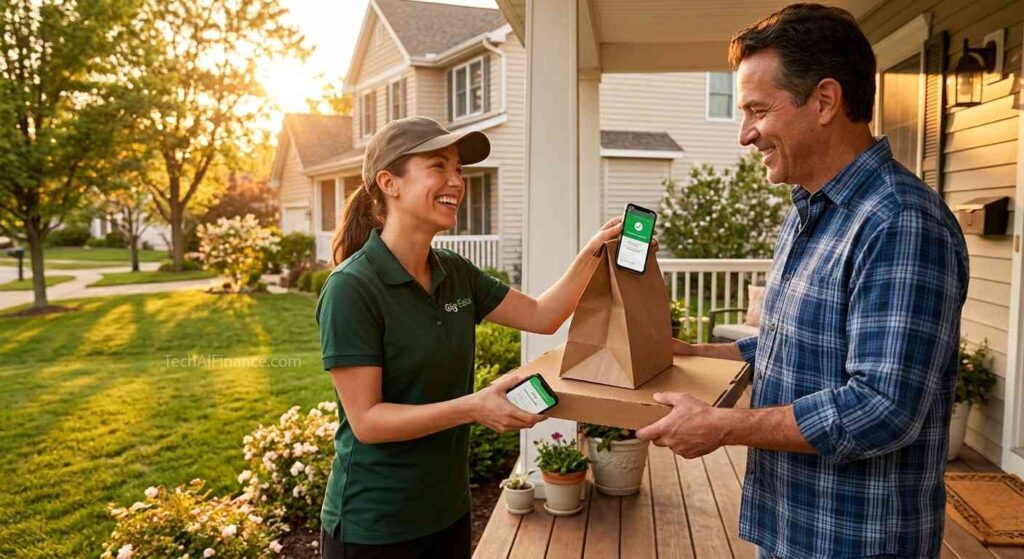
The most financially successful gig workers in America do not rely on a single app. They build a carefully chosen stack of two to four apps that cover different time slots, different income levels and different market conditions, so that they are always earning from the best available option at any given moment rather than waiting for one app to produce work.
The foundational stacking principle
The goal of multi-apping is to eliminate idle time, the hours you spend waiting for orders that never come on one platform while another platform would have had work available for you. Every hour you spend waiting for a DoorDash order that does not materialize while Instacart has available batches nearby is an hour of income you lost to single-platform dependence. Stacking eliminates that waste.
Recommended app stacks by schedule and goal
| Stack 1: Maximum Hourly Earnings (Requires a Car) Primary: Uber (rideshare) plus Uber Eats enabled simultaneously in the same app Secondary: Lyft on a second phone to run simultaneously during rideshare periods Passive layer: Turo or Getaround earning from your car when you are not driving gig work Estimated combined gross: $22 to $38 per hour during active working periods Best schedule: Friday and Saturday evenings, Saturday and Sunday daytime. |
| Stack 2: Flexible No-Car Income Primary: Rover for pet care bookings in your neighborhood Secondary: TaskRabbit for furniture assembly and home task bookings in your area Passive layer: Neighbor to rent unused storage space in your home Estimated combined gross: $25 to $60 per hour for active work plus $75 to $250 per month passive Best schedule: Weekdays for TaskRabbit, weekends for Rover, Neighbor earns passively 24/7. |
| Stack 3: Balanced Delivery Plus Tasks Primary: Instacart for grocery delivery with above-average tips Secondary: DoorDash during Instacart slow periods or evenings when grocery demand drops Tertiary: Handy for recurring cleaning clients on weekday mornings Estimated combined gross: $18 to $28 per hour for delivery plus $22 to $45 per hour for cleaning Best schedule: Morning cleaning appointments, afternoon and evening delivery work. |
The Gig Worker Tax Guide: What You Must Know
Every dollar you earn from a gig economy app is self-employment income subject to both self-employment tax and regular income tax. Understanding your tax obligations before you start, rather than discovering them in February when you receive a 1099, prevents the most common and most costly financial mistake gig workers make.
Self-employment tax
As a gig worker, you are classified as an independent contractor rather than an employee. This means you are responsible for the full 15.3 percent self-employment tax on your net gig income, which covers Social Security and Medicare contributions that are split between employer and employee in traditional employment. On top of that, you owe federal income tax at your regular rate and state income tax where applicable. The practical rule: set aside 25 to 30 percent of every gig paycheck for taxes if this is supplemental income on top of a salaried job, or 30 to 35 percent if this is your primary income source.
Quarterly estimated tax payments
If you expect to owe $1,000 or more in taxes for the year from your gig income, the IRS requires you to make quarterly estimated tax payments on the following schedule: April 15 for income from January 1 through March 31, June 15 for April 1 through May 31, September 15 for June 1 through August 31 and January 15 for September 1 through December 31. Failing to make quarterly payments results in penalties even if you pay the full amount when you file in April. Track your gig income monthly so you can calculate and pay your quarterly estimates accurately.
Tax deductions for gig workers
The good news is that gig workers can deduct legitimate business expenses from their taxable income, which meaningfully reduces the tax burden. Key deductions include:
- Mileage: The IRS standard mileage rate for 2026 is 70 cents per mile for all miles driven for business purposes including delivery trips, driving to pickup locations and driving between gig assignments. Track every business mile using an app like MileIQ, Everlance or the Stride app.
- Phone and data: The portion of your phone bill used for gig work is deductible. Most gig workers deduct 50 to 80 percent of their monthly phone and data plan cost.
- Phone mount, insulated delivery bag and equipment: Any equipment you purchased specifically for gig work is deductible in the year you purchased it.
- Health insurance premiums: If you pay for your own health insurance as a self-employed individual, those premiums are deductible.
- Home office: If you use a dedicated portion of your home exclusively for gig work administration, a proportional amount of your rent or mortgage and utilities is deductible.
The 1099-K and 1099-NEC forms
Gig platforms are required to issue a 1099-NEC form if they paid you $600 or more during the tax year. Some platforms issue 1099-K forms instead, which report gross payment processing volume. You are required to report all gig income on your tax return regardless of whether you receive a 1099 form. Platforms may not issue a 1099 for amounts below $600, but the income is still taxable. Keep your own income records throughout the year so your tax filing is accurate regardless of what forms you receive.
Full App Comparison Table
| App | Category | Gross Hourly | Platform Fee | Vehicle Needed | Best For |
| DoorDash | Food delivery | $15-25/hr | 15% of order | Yes | First gig app, all markets |
| Instacart | Grocery delivery | $17-28/hr | Variable | Yes (full service) | Above-avg tips, Costco markets |
| Uber Eats | Food delivery | $14-22/hr | 15-25% | Yes | Combining with rideshare |
| Gopuff | Convenience delivery | $16-23/hr | Variable | Yes | Scheduled shift workers |
| Shipt | Grocery delivery | $18-30/hr | Variable | Yes | Building preferred clients |
| Uber | Rideshare | $18-35/hr | 15-25% | Yes | Highest hourly in good markets |
| Lyft | Rideshare | $17-32/hr | 15-25% | Yes | Pairing with Uber |
| HopSkipDrive | Child transport | $22-40/hr | Variable | Yes | Drivers with childcare exp. |
| TaskRabbit | Physical tasks | $25-75+/hr | 15% | No (most tasks) | Skilled tradespeople |
| Handy | Cleaning/handyman | $22-60/hr | Variable | No | Recurring client income |
| Rover | Pet care | $15-80+/service | 20% | No | Animal lovers |
| Wag | Dog walking | $15-50/service | 40% | No | Urban dog walkers |
| Thumbtack | Skilled services | $30-150+/hr | Lead cost | No (most) | Professionals in any trade |
| Takl | Home/outdoor tasks | $20-55/hr | 20% | No | Equipment owners |
| Turo | Car rental | $400-1,200/mo | 25-40% | Vehicle listed | Car owners with idle vehicles |
| Getaround | Car sharing | $350-900/mo | 40% | Vehicle listed | Truly passive car income |
| Neighbor | Storage rental | $50-500/mo | 4.9% | No | Unused space owners |
| Swagbucks | Micro-tasks | $25-150/mo | N/A | No | Idle-time supplemental earner |
| 💡 Real-World Example Consider a hypothetical 28-year-old registered nurse in Phoenix who works three 12-hour shifts per week and wants to earn an additional $1,200 to $1,500 per month from her four free weekdays. She signs up for Rover and sets her rates at $30 per 30-minute dog walk and $55 per overnight boarding visit. She also activates DoorDash for evening delivery on her off days. Month one: She completes 14 dog walks and 3 overnight boarding stays on Rover, earning $420 from walks and $165 from boarding, totaling $585 before Rover’s 20 percent fee, netting $468. DoorDash adds $280 gross from 14 hours of evening delivery, netting approximately $210 after fuel costs. Total net month one: $678. Month three: She has built a roster of six preferred Rover clients who request her specifically. She earns $840 net from Rover and $220 net from DoorDash during the same available hours. She also listed her parking space on Neighbor for $95 per month, adding $90.35 after the platform fee. Total net month three: $1,150. Month six: Preferred clients now account for 80 percent of her Rover bookings. She earns $980 net from Rover, $180 from DoorDash and $90 from Neighbor. Total net: $1,250 per month from 16 to 18 hours of gig work per week. She reaches her $1,200 monthly goal by month four without any additional apps. This example is illustrative. Actual earnings depend on market conditions, time invested and individual effort. |
Frequently Asked Questions
How do I choose between delivery apps when I am just starting out?
Start with the app that has the strongest market presence in your specific city. In most US markets, that is DoorDash for food delivery or Instacart for grocery delivery. Sign up for both in the same week, complete your first week of work on each and track your gross earnings per hour on each platform. After two weeks, you will have genuine data about which platform performs better in your specific market and time slots rather than relying on general averages that may not reflect your local conditions.
Can I do gig work with a car that has high mileage?
Yes, for most apps. DoorDash, Instacart, Shipt, Uber and Lyft all have maximum vehicle age requirements rather than maximum mileage requirements in most markets. A 2014 vehicle in good mechanical condition generally meets requirements for food delivery apps even with 150,000 miles. Rideshare apps like Uber and Lyft may have minimum model year requirements that are stricter than food delivery apps. Check each app’s specific vehicle requirements for your market before signing up, as requirements vary by city.
What is the best gig app if I do not have a car?
Rover, TaskRabbit, Thumbtack and Neighbor do not require a car for most of their income categories. Rover dog walking is walkable and Rover boarding happens in your home. TaskRabbit furniture assembly and mounting tasks happen at the client’s location, and clients typically expect the Tasker to provide their own transportation but the jobs themselves do not require driving during the work. If you have a bicycle or scooter, DoorDash and Uber Eats both accept bicycle delivery in qualifying urban markets.
How much should I set aside for taxes from gig income?
If gig work is supplemental income on top of a regular salary, set aside 28 to 32 percent of every gig paycheck for taxes. The exact percentage depends on your total income and state tax rate. If gig work is your primary income, consult a tax professional or use the IRS withholding estimator at irs.gov/individuals/tax-withholding-estimator to calculate your specific quarterly estimated payment amounts. The Stride app at stridehealth.com is a free tool designed specifically for gig workers that tracks earnings, logs mileage automatically and calculates quarterly tax estimates in one place.
Can gig income affect my eligibility for government benefits?
Yes. If you receive income-based government benefits including Medicaid, SNAP, housing assistance or other means-tested programs, additional gig income can affect your eligibility or benefit amount. Report all income changes to your relevant benefits administrator. If you are uncertain how additional income affects your specific benefits, contact the administering agency directly or speak with a social services navigator before starting significant gig work. The goal of additional income is to improve your financial situation, and understanding the interaction with existing benefits is an important part of making that calculation correctly.
| ⭐ Key Takeaway The most important thing you can do before starting any gig work is track every dollar you earn and every dollar you spend doing it. Gross pay looks very different from net pay after fuel, vehicle wear and taxes. The app that advertises the best earnings is not always the app that produces the best net income for your specific situation, your specific vehicle, your specific market and your specific time availability. Download the Gridwise app free. It tracks your earnings and expenses across every major gig platform in one dashboard and tells you exactly what you are actually earning per hour after costs. You cannot make smart decisions about your gig work without accurate data about what your gig work is actually producing. |
Conclusion
Twenty-two apps covering five categories from food delivery and rideshare to pet care, physical tasks and genuinely passive income from assets you already own. The range of options in the US gig economy in 2026 means that almost every American with any combination of time, vehicle, skills or unused space has a genuine income opportunity available to them within 24 to 72 hours of signing up.
The difference between the Americans who earn meaningful supplemental income from gig work and those who earn very little is almost always the same: the successful ones tracked their real earnings, chose apps strategically rather than randomly, stacked complementary apps to eliminate idle time and managed their tax obligations properly so that gig income actually improved their financial situation rather than creating an unexpected tax bill.
For Americans who want to take their income further than supplemental gig earnings, our guide on best side hustles for Americans in 2026 covers 20 platforms for skill-based and creative work with meaningfully higher income ceilings than gig apps. And for those building toward replacing a salary entirely, our guide on how to make passive income in the US 2026 covers the income structures that generate earnings whether or not you are actively working.
| 📥 Free Download: Gig App Earnings Tracker 2026 A practical spreadsheet to log your earnings, hours and expenses across every gig app you use, so you always know your true hourly rate after costs. Includes: ✔ Multi-app earnings log: track gross pay, tips, bonuses and deductions side by side ✔ True hourly rate calculator: factors in fuel, mileage, platform fees and wait time ✔ Quarterly tax estimator: automatically calculates what to set aside for self-employment tax Free. Email required. For informational purposes only. |
| 📲 Share This Guide If this guide helped you choose the right gig apps for your situation, share it with someone who is still trying to decide where to start. Share on WhatsApp, Facebook or by text message. Thank you for reading TechAIFinance.com. |
Read Next
Continue building your income on TechAIFinance.com:
- Best Side Hustles for Americans in 2026: 20 Real Platforms That Pay
- How to Start a Profitable Blog in the US 2026
- How to Make Passive Income in the US 2026
- Best Free AI Tools for Managing Your Money in 2026
- How to Build an Emergency Fund From Zero
| ✍ About the Author Written by: TechAIFinance Editorial Team Edited and Fact-Checked by: Olayinka Adejugbe Olayinka Adejugbe is not a licensed financial advisor. The content on TechAIFinance.com is produced for educational purposes only and should not be treated as personalized financial advice. Olayinka is the founder and lead editor of TechAIFinance.com. He holds a Global Certification in Artificial Intelligence and Applied Innovation and an Award of Completion in Behavioral Counseling from the World Health Organization. With a strong working knowledge of personal finance and accounting principles, Olayinka oversees the editorial review of every article on this site to ensure accuracy, currency and practical usefulness. Every article on TechAIFinance.com is produced by our research team and reviewed by Olayinka before publication. We verify statistics against named authoritative sources and update content when circumstances change. Visit our About page to learn more about our editorial process. Use our Contact page to get in touch. |
Important Disclaimer
The content published on TechAIFinance.com is for educational and informational purposes only. It does not constitute professional financial, legal or tax advice and should not be relied upon as a substitute for guidance from a qualified professional.
Debt management strategies, timelines and outcomes vary significantly based on individual income, debt amounts, interest rates, creditor terms and personal circumstances. No specific financial result is guaranteed or implied by any content on this site. Always consult a qualified financial advisor, credit counselor or attorney before making significant financial decisions. Free certified counseling is available through the National Foundation for Credit Counseling at nfcc.org.