The AI revolution isn’t coming, it’s already here. But the real question isn’t whether AI will change your job. It’s how much of it will change, and what you can do about it.

If you’ve been anxiously scrolling through headlines about AI taking jobs, you’re not alone. A survey reveals that roughly a quarter of workers (24%) are worried AI will soon make their job obsolete. Zoomers feel the most threatened: 32% of workers aged 18 to 24 say they are concerned, compared to just 14% of workers aged 65 and over.
But here’s what the headlines won’t always tell you: The rise of AI could lead to the elimination of as many as 92 million jobs by 2025, while simultaneously creating around 170 million new ones, resulting in a net gain of 78 million jobs.
The reality? AI doesn’t replace jobs wholesale, it replaces tasks within jobs. Understanding this distinction could be the difference between career anxiety and career advancement.
The Big Picture: Understanding Displacement vs. Automation
- Job Displacement: A role is eliminated because AI makes the position economically unnecessary.
- Task Automation: Specific tasks within a job are automated, but the role continues to exist.
- Job Exposure: A job contains tasks that AI can assist with, even if full automation isn’t viable.
1. Customer Service Representatives
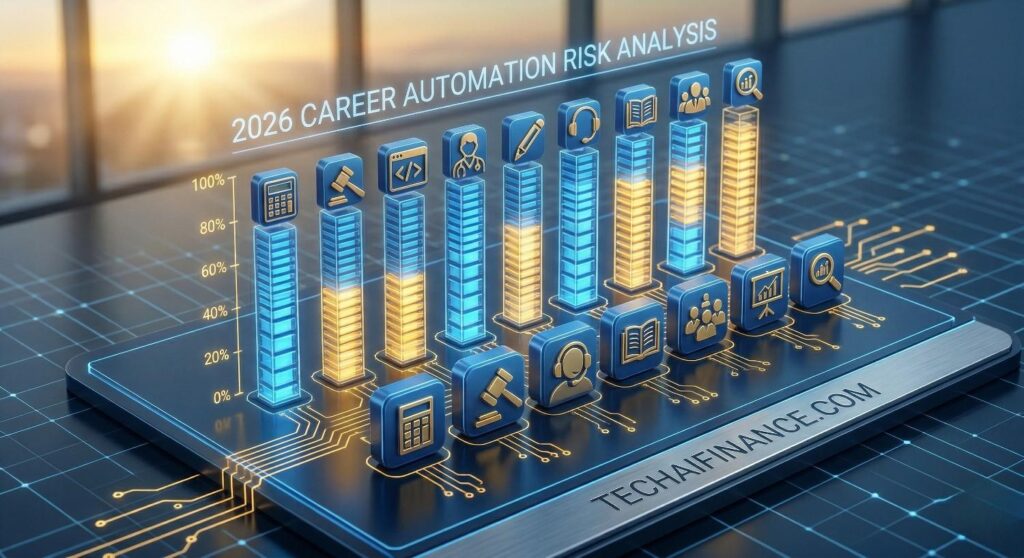
AI Automation Potential: 60-75%
What AI Can Replace: AI chatbots and virtual assistants handle first-level inquiries, returns, and scheduling. McKinsey analysis suggests this sector will see some of the highest task losses.
What Remains Human: Complex problem-solving requiring empathy, handling escalated complaints, and building deep customer relationships.
2. Accountants and Bookkeepers
AI Automation Potential: 40-55% (tasks, not jobs)
What AI Can Replace: Data entry, invoice processing, and reconciliations. Platforms now analyze 100% of transactions instead of small samples.
What Remains Human: Professional judgment, interpretation of complex US tax codes (IRS/GAAP), and strategic financial advising.
3. Software Developers
AI Automation Potential: 25-40%
What AI Can Replace: Writing boilerplate code, debugging simple errors, and generating documentation via tools like GitHub Copilot.
What Remains Human: System architecture, understanding complex business requirements, and creative problem-solving. Roles are projected to grow by 17.9% as developers become “AI orchestrators.”
4. Lawyers and Legal Professionals
AI Automation Potential: 30-45%
What AI Can Replace: Document review, legal research, and administrative support. Paralegals face a higher risk (up to 80%) of task automation.
What Remains Human: Courtroom advocacy, negotiation, client counseling, and ethical judgment calls.
5. Data Entry Clerks
AI Automation Potential: 90-95%
What AI Can Replace: Almost all manual entry. AI systems process 1,000+ documents per hour with near-zero error rates.
What Remains Human: System oversight and high-level data governance. This is a high-risk occupation requiring urgent upskilling.
6. Retail Cashiers
AI Automation Potential: 65-70%
What AI Can Replace: Transaction processing and payment verification. Self-checkout and AI verification are projected to reach 25% adoption by 2028.
What Remains Human: Loss prevention, age-restricted product verification, and hands-on customer assistance.
7. Healthcare Workers (Nurses, Doctors, Therapists)
AI Automation Potential: 15-25%
What AI Can Replace: Medical transcription, scheduling, and preliminary diagnostic imaging analysis.
What Remains Human: Physical care, social perceptiveness, and persuasion. Nurse practitioner roles are projected to grow by 52% through 2033.
8. Manufacturing & Assembly Line Workers
AI Automation Potential: 55-70%
What AI Can Replace: Routine assembly, machine operation, and packaging. Robotics may replace up to 20 million global manufacturing jobs by 2030.
What Remains Human: Machine maintenance, troubleshooting, and production optimization.
9. Writers and Content Creators
AI Automation Potential: 35-50%
What AI Can Replace: First drafts, social media posts, product descriptions, and basic reporting templates.
What Remains Human: Investigative journalism, brand voice, original storytelling, and emotional resonance.
10. Financial Analysts & Banking Professionals
AI Automation Potential: 45-60%
What AI Can Replace: Loan processing, basic risk modeling, and data reporting.
What Remains Human: Client relationship management, complex risk assessment, and interpreting market sentiment.

The Skills That Keep You Irreplaceable
Across all 10 careers, these “AI-proof” skills are essential:
- Judgment: AI provides data; humans make the final, high-stakes decisions.
- Emotional Intelligence: Empathy remains a uniquely human competitive advantage.
- AI Fluency: Understanding how to use AI as a tool is the “new workplace currency.”
- Adaptability: 75% of US employers now prioritize lifelong learning.
Your 2026 Action Plan
- Audit Your Tasks: Identify which parts of your day are repetitive – those are your automation targets.
- Double Down on Human Skills: Invest in creativity, leadership, and relationship-building.
- Learn the Tools: Don’t fear the software; learn to direct it.
- Stay Curious: The landscape shifts monthly. Continuous learning is your best insurance policy.
FAQ
Q: Will AI replace my job entirely in 2026? A: Unlikely. For most, AI automates a percentage of tasks, not the whole role.
Q: Which jobs are safest? A: Skilled trades (plumbers, electricians), healthcare providers, and high-level strategists.
Q: Should I learn AI if I’m not in tech? A: Yes. AI literacy is becoming as fundamental as knowing how to use email or Excel.
Read Next
Continue building your financial foundation with these guides on TechAIFinance.com:
- How to Fix Bad Credit in 6 Months: A Step-by-Step Guide for Americans
- How to Create a Budget When Living Paycheck to Paycheck
- How to Build an Emergency Fund From Zero
- How ChatGPT Can Create A Side Hustle Plan For You
- How To Get Out Of Debt Fast On Low Income
| ✍ About the Author Written by: TechAIFinance Editorial Team Edited and Fact-Checked by: Olayinka E. Adejugbe Olayinka E. Adejugbe is the founder and lead editor of TechAIFinance.com. With a professional background in Accounting, he is also a specialist in Prompt Engineering and Life Coaching, allowing him to bridge the gap between technical financial strategy and modern AI-driven growth. Working alongside a dedicated research team, Olayinka ensures that every guide from AI technology to global wealth, is accurate, human-led, and actionable. We believe financial freedom should be accessible to everyone at every income level, and we are committed to helping you harness technology to take control of your financial future. |
