| Disclosure and Content Note This guide provides information about starting a blog for income in the United States. It is not financial or business advice. Blog income results vary significantly based on niche, content quality, consistency and market conditions. Some links in this guide may be affiliate links. TechAIFinance.com may earn a commission if you purchase through our link at no additional cost to you. This does not influence which tools or platforms are recommended. All pricing and platform details were verified in April 2026. Hosting plans, plugin costs and platform features change regularly. Always verify current pricing at each provider’s official website before purchasing. |

Most blogging advice on the internet was written by people whose blogs grew during 2012 to 2018, a period when putting almost anything online and waiting for Google to index it was a credible strategy. The web was less saturated, Google’s algorithm was less discerning and the barrier to ranking for a moderately competitive keyword was a fraction of what it is today.
That era is over. Blogs that start today and succeed do so differently from blogs that succeeded ten years ago. The ones that build real income in 2026 are built around specific topics with genuine depth, written for specific readers with specific problems, and monetized through multiple income streams that compound over time rather than depending on a single ad network clicking into relevance at 100,000 monthly page views.
The good news is that blogging is still one of the most viable long-term income-generating activities available to Americans who are willing to approach it with the same seriousness they would bring to any other professional endeavor. Bloggers in the right niches, with the right technical foundation, publishing consistently high-quality content and applying current SEO practices, still build audiences that generate $3,000 to $15,000 per month and more. The difference is that it now takes genuine expertise, a clear strategy and consistent execution over 12 to 24 months rather than publishing 50 articles and waiting.
This guide was written by Olayinka Adejugbe, founder of TechAIFinance.com and holder of a Global Certification in Artificial Intelligence and Applied Innovation. Everything in this guide reflects how profitable blogs are actually built in 2026, not how they were built in 2018.
| ℹ Quick Summary Key blogging facts for the US market in 2026: There are over 600 million blogs on the internet as of 2026 per Blogging Wizard research. Bloggers who treat blogging as a business rather than a hobby earn an average of $54,108 per year according to ProBlogger’s 2025 income survey. Finance, health, technology and personal development are the highest CPM niches for US bloggers, with ad rates between $15 and $45 per 1,000 pageviews. Bloggers who publish consistently for 18 months see median traffic growth of 3.5 times their starting traffic per Ahrefs content research. The average blog reaches its first $1,000 per month milestone at 14 to 18 months post-launch when applying current SEO best practices. Sources: Blogging Wizard State of the Blogosphere 2026. ProBlogger Income Survey 2025. Ahrefs Content Explorer research. |
| 📘 What This Guide Covers In this complete guide you will find: How to choose a niche that is genuinely profitable in the US market in 2026 Step-by-step WordPress setup with exact hosting, theme and plugin recommendations How to do keyword research that finds topics readers are searching for right now How to write blog posts that rank on Google in 2026 with AI assistance Every major monetization method fully explained with real income figures A realistic timeline and monthly milestones for your first 24 months The specific mistakes that kill new blogs before they ever earn a dollar |
Table of Contents
- How Blogging Profitability Actually Works in 2026
- Step 1: Choose a Profitable Niche
- Step 2: Set Up Your Blog the Right Way
- Step 3: Do Keyword Research Before You Write Anything
- Step 4: Write Content That Ranks and Converts
- Step 5: Build Your SEO Foundation
- Step 6: Monetize Your Blog Across Multiple Income Streams
- Step 7: Use AI to Work Smarter, Not Just Faster
- Step 8: Track What Matters and Adjust
- Your First 24-Month Blogging Roadmap
- Common Mistakes That Kill New Blogs
- Frequently Asked Questions
How Blogging Profitability Actually Works in 2026
Before walking through each step, it helps to understand the underlying mechanics of how a blog makes money. Most people have a vague idea that blogs make money from advertising, but the reality is more nuanced and more interesting.
A blog earns money because it builds an audience of people with a specific need or interest, and then connects that audience with products, services or advertisers that serve that need. The larger and more engaged the audience, the more valuable that connection is, and the more ways a blogger can monetize it. The key insight is that the audience comes first. Monetization is a consequence of a loyal, trusting readership, not a cause of it.
Traffic, the number of people who read your blog, is the foundation of almost every blogging income stream. Most new bloggers significantly underestimate how much traffic they need before meaningful income starts. Here is a realistic picture of what different traffic levels generate in the US market in 2026:
| Monthly Sessions | Ad Income (Display) | Affiliate Potential | Sponsored Posts | Total Range |
| 5,000 | $75 to $150 | $100 to $400 | $0 to $100 | $175 to $650 |
| 15,000 | $225 to $500 | $300 to $1,200 | $100 to $300 | $625 to $2,000 |
| 30,000 | $500 to $1,200 | $600 to $2,500 | $200 to $600 | $1,300 to $4,300 |
| 75,000 | $1,200 to $3,000 | $1,500 to $6,000 | $500 to $1,500 | $3,200 to $10,500 |
| 150,000 | $2,500 to $6,500 | $3,000 to $12,000 | $1,000 to $3,000 | $6,500 to $21,500 |
Note: Figures are estimates for US-based blogs in personal finance, technology and health niches at April 2026 ad rates. Actual earnings depend on niche, audience engagement, ad network quality and affiliate program relevance.
The table above makes one thing immediately clear: getting from zero to $1,000 per month from a blog requires reaching somewhere between 15,000 and 30,000 monthly sessions. Getting there in 12 to 18 months is realistic with a properly structured blog in the right niche publishing consistent quality content. Getting there in three months is not realistic regardless of what any course or guru claims.
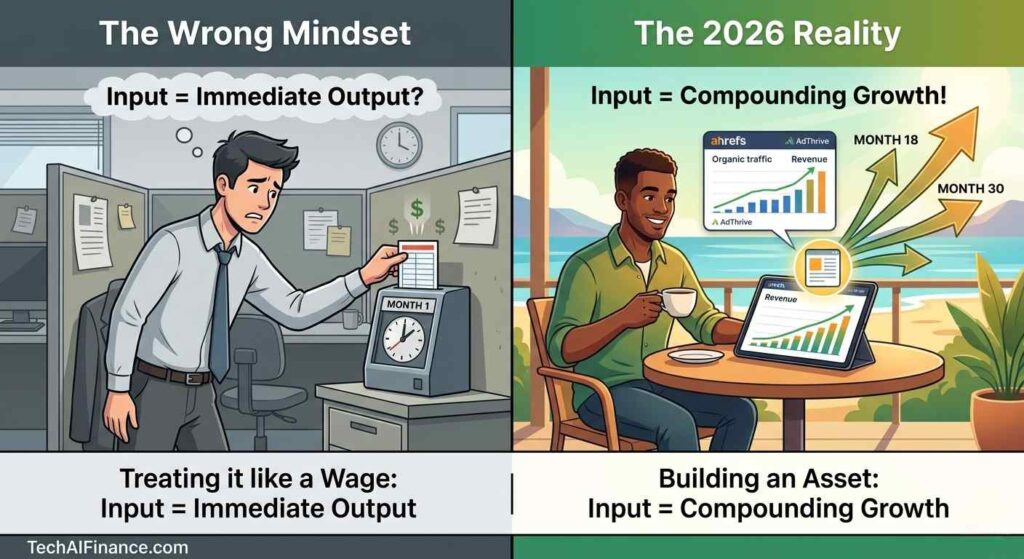
| ⭐ Key Takeaway The most important mindset shift before starting a blog is accepting that you are building an asset, not earning a wage. For the first six to twelve months, you put in work and receive almost no income. The income comes later, from the compounding traffic that accumulates on well-written, well-optimized articles over time. A blog article that took four hours to write in month three might generate $40 per month by month 18 and $80 per month by month 30, simply because more people find it over time. That compounding is what makes blogging genuinely valuable as a long-term income source. |
Step 1: Choose a Profitable Niche
Niche selection is the single most consequential decision in the entire blogging process. Getting it right means you are building on solid ground from the first day. Getting it wrong means months of effort in a category that either has no audience, no monetization potential or more competition than you can overcome without a significant existing platform.
A profitable blog niche must satisfy three conditions simultaneously. It must have an audience of people actively searching for information online. It must have monetization potential, meaning advertisers are willing to pay premium rates for access to that audience, or affiliate products exist that naturally serve the audience’s needs. And you must have enough genuine knowledge, experience or passion for the topic to sustain publishing quality content consistently for two or more years without running out of things to say.
The highest-paying niches for US bloggers in 2026
Ad networks pay publishers based on the value of their audience to advertisers. Niches where products and services are expensive and where the buyer needs information before purchasing command the highest ad rates. Here are the niches that consistently produce the highest revenue per thousand pageviews for US bloggers:
- Personal finance: CPM rates of $20 to $45. Advertisers include banks, credit card companies, investment platforms, insurance providers and tax software. This is the highest-paying niche category on average for US bloggers. Sub-niches include budgeting, debt payoff, investing, credit building, insurance and retirement planning.
- Health and wellness: CPM rates of $15 to $35. Advertisers include supplement companies, fitness equipment, health insurance, telehealth platforms and medical services. Sub-niches with the highest rates include mental health, chronic illness management, women’s health and fitness for specific demographics.
- Technology and software: CPM rates of $18 to $40. Advertisers include software companies, hardware manufacturers, web hosting providers and online tools with recurring subscription revenue. Sub-niches include AI tools, cybersecurity software, productivity tools and small business technology.
- Legal and professional services: CPM rates of $25 to $50. Advertisers include legal services platforms, insurance companies, financial advisors and professional certification programs. The audience has high intent to purchase expensive services.
- Home improvement and real estate: CPM rates of $12 to $28. Advertisers include home services companies, building materials retailers, mortgage lenders and real estate platforms. Sub-niches include DIY home repair, interior design, smart home technology and rental property investing.
How to validate your niche before committing
Do not start a blog in a niche simply because you enjoy the topic. Validate that the niche has the three required components: active search demand, monetization potential and genuine audience interest in reading rather than just watching videos.
Validate search demand
Go to Google and search five to ten questions you would naturally write about in your niche. Are there other blogs appearing in the results? Are there Wikipedia articles, forums and YouTube videos? Strong search demand is evidenced by a diverse mix of content already ranking. A niche where you can barely find anything ranking for your questions has no search demand. Avoid it.
Validate monetization potential
Go to Google Keyword Planner at ads.google.com and check the suggested bid range for five to ten keywords in your niche. A suggested bid above $2.00 per click indicates strong advertiser interest. A suggested bid below $0.50 per click indicates weak advertiser interest and correspondingly low display ad rates. You can also search for affiliate programs in your niche by typing your niche topic plus the word affiliates into Google. If no affiliate programs exist, direct monetization will be more challenging.
Validate your sustainability
Open a blank document and try to write 50 potential blog article titles in your niche within 30 minutes. If you struggle to reach 30, the niche may be too narrow for a sustainable publishing schedule. If you reach 50 easily and still have more ideas, the niche has enough depth to support years of consistent content creation.
| ⚠ Watch Out Three niche mistakes that kill blogs before they ever earn money: Choosing a niche that is too broad: Personal development, fitness and food are categories, not niches. Personal finance for single mothers, strength training for people over 50 and budget meal planning for college students are niches. The more specific your niche, the less competition you face and the more precisely advertisers can target your audience. Choosing a niche because someone else is making money from it: A personal finance blog written by someone with no genuine financial knowledge will not rank against the dozens of established, authoritative blogs already dominating that space. Niche choice must align with genuine expertise or deep passion. Choosing a niche that is too narrow: A blog about left-handed guitar players in Arizona has a niche, but the audience is too small to generate meaningful traffic or advertising income. Make sure your niche has a national or international US-focused audience large enough to produce tens of thousands of monthly searches. |
| 🔧 Step Checklist Step 1 Checklist: Write down three to five niche ideas that combine your genuine expertise with demonstrable search demand Check Google Keyword Planner for bid rates on five keywords in each niche Write 50 potential article titles for your strongest niche Confirm that at least three affiliate programs exist in your niche Verify that established blogs exist in your niche but do not yet comprehensively cover every topic you plan to address |
Step 2: Set Up Your Blog the Right Way
The technical setup of your blog determines whether Google can find and index your content, whether readers trust it enough to spend time on it and whether you own the platform completely or are building on someone else’s land. Getting the technical foundation right from the beginning saves you from expensive and time-consuming migrations later.
Why WordPress is still the right choice in 2026
WordPress powers 43 percent of all websites on the internet as of 2026, according to W3Techs. For bloggers specifically, WordPress.org, the self-hosted version, remains the most powerful and flexible option because you own your content completely, you have access to thousands of plugins that extend your blog’s functionality, and the SEO capabilities are unmatched by any hosted blogging platform. Alternatives like Wix, Squarespace and Blogger are appropriate for simple personal sites but create limitations in SEO customization, monetization options and content ownership that become significant as your blog grows.
The distinction between WordPress.org and WordPress.com is important. WordPress.com is a hosted service that limits monetization options on free and lower-tier plans and gives you less control over your site. WordPress.org is the self-hosted version where you download the software, install it on your own hosting account and have complete control over everything. This guide covers WordPress.org exclusively.
Choosing your hosting provider
Web hosting is the service that stores your blog’s files and serves them to visitors when they type your web address. For a new blog in 2026, shared hosting is sufficient and costs between $3 and $8 per month from reputable providers. As your traffic grows beyond 50,000 monthly sessions, upgrading to a faster hosting tier becomes worth the additional cost.
| 🛠 Recommended Tools Recommended hosting providers for new US blogs in 2026: SiteGround (siteground.com): Strong performance, excellent customer support and one-click WordPress installation. Plans start at approximately $3.99 per month for the first year. Bluehost (bluehost.com): Official WordPress-recommended hosting. Beginner-friendly setup, strong uptime and US-based customer support. Plans start at approximately $2.95 per month for the first year. WP Engine (wpengine.com): Premium managed WordPress hosting for blogs expecting faster growth. Better performance than shared hosting. Plans start at approximately $20 per month. All prices verified at each provider’s official website in April 2026. Always compare current promotional rates before purchasing. |
Choosing and registering your domain name
Your domain name is your blog’s address on the internet, such as techaifinance.com. Choosing a good domain name requires balancing several factors. It should be memorable and easy to spell. It should reflect your niche without being so specific that it limits you if your focus evolves slightly. It should be available as a .com domain, which still carries more authority and memorability than alternative extensions for US-focused blogs. And it should not contain hyphens or numbers, which both reduce memorability and suggest lower quality to some audiences.
Domain names typically cost between $10 and $15 per year from registrars like Namecheap at namecheap.com or Google Domains. Many hosting providers include a free first-year domain with their hosting plans. After the first year, renewal is the standard annual rate. Register your domain for at least two years upfront if possible, as multi-year registration is a minor positive signal to Google that your site is not a temporary project.
Installing WordPress and essential plugins
All reputable hosting providers include a one-click WordPress installer in their hosting control panel. The process takes less than five minutes. After installation, log in to your WordPress dashboard at yourdomain.com/wp-admin and complete the following essential configuration steps before writing a single post.
Set your permalink structure
Go to Settings, then Permalinks, and select the Post name option. This creates clean URLs that include your article title, such as yourdomain.com/how-to-build-emergency-fund, rather than the default numeric URLs that tell Google and readers nothing about your content.
Install an SEO plugin
Rank Math SEO at rankmath.com is the most capable free SEO plugin available for WordPress in 2026. It manages your meta titles, meta descriptions, XML sitemaps, schema markup and keyword optimization all in one plugin. Install it from the WordPress plugin directory and complete the setup wizard before publishing any content.
Install a caching plugin
Page speed is a confirmed ranking factor for Google and directly affects both your search rankings and your reader experience. WP Rocket is the strongest paid caching plugin at approximately $59 per year. WP Super Cache is a solid free alternative. Install whichever fits your budget and configure it to enable page caching immediately.
Choose and install your theme
Your blog theme controls the visual design and layout of your site. GeneratePress at generatepress.com is the best lightweight WordPress theme for blogs that prioritize speed and SEO in 2026. The free version is sufficient to start. Astra at wpastra.com is an equally strong alternative. Both themes load faster than most premium themes and are built with clean code that search engines can crawl efficiently. Avoid themes with heavy visual effects, sliders and complex layouts that slow page load times.
| 🔧 Step Checklist Step 2 Checklist: Purchase hosting from a reputable provider with one-click WordPress installation Register your .com domain name with clear niche relevance Install WordPress through your hosting control panel Set permalink structure to Post name Install and configure Rank Math SEO plugin Install a caching plugin and verify it is active Install GeneratePress or Astra theme Set up Google Analytics 4 by creating a property at analytics.google.com and adding the tracking code Set up Google Search Console at search.google.com/search-console and submit your sitemap |
Step 3: Do Keyword Research Before You Write Anything
Keyword research is the practice of identifying the specific words and phrases that your target readers type into Google when they are looking for information you can provide. Writing blog posts without keyword research is the equivalent of opening a store in a location where no one walks by and then wondering why no one comes in. You might write excellent content, but if no one is searching for the specific question your article answers, no one will ever find it.
Effective keyword research in 2026 focuses on three things: finding keywords with genuine search volume, identifying keywords where your new blog can realistically compete for a page one ranking, and selecting keywords that signal the type of intent, whether informational or transactional, that aligns with how you plan to monetize that specific piece of content.
Understanding keyword difficulty
Keyword difficulty is a metric that estimates how competitive it is to rank on the first page of Google for a specific keyword. Tools like Ahrefs and Semrush express this as a score from 0 to 100. For a new blog with no existing authority, targeting keywords with a difficulty score above 40 in Ahrefs terms is generally unrealistic. New blogs that succeed in their first twelve months focus almost entirely on low-competition keywords where their content can realistically appear on page one.
Low-competition keywords share a pattern: they tend to be longer, more specific questions rather than short, broad terms. A blog cannot rank for the keyword personal finance on any reasonable timeline. The same blog can realistically rank for how to build an emergency fund when living paycheck to paycheck, a long, specific question with lower competition and clear intent from the reader. This approach is called long-tail keyword targeting, and it is the foundation of every successful new blog’s SEO strategy in 2026.
Free and low-cost keyword research tools
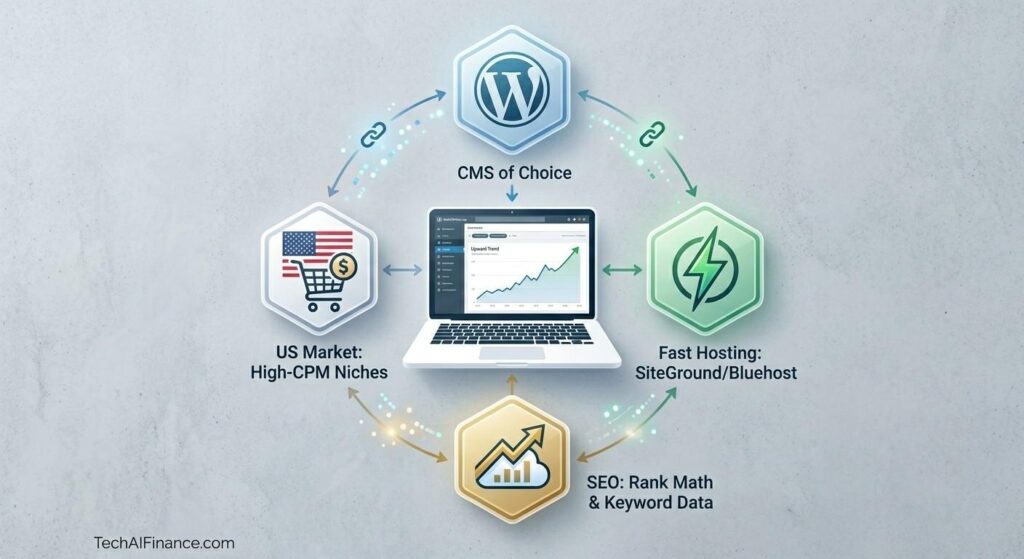
| 🛠 Recommended Tools Keyword research tools available to new bloggers in 2026: Google Keyword Planner (free): Go to ads.google.com to access monthly search volume data and advertiser bid ranges for any keyword. Requires a free Google Ads account but you do not need to run any ads. Ubersuggest (free tier available): Neil Patel’s tool provides keyword suggestions, estimated traffic and basic difficulty data. The free tier allows a limited number of daily searches. AnswerThePublic (free searches available): Generates question-format keyword ideas from any seed topic. Excellent for finding the exact questions your audience asks. Free tier allows a limited number of searches per day. Google Search itself (free): Type any keyword into Google and study the People Also Ask section and the Related Searches section at the bottom of results. These are real questions Google knows people are asking. Semrush (limited free tier): More powerful than free tools for competitive analysis. The free account allows ten searches per day. |
How to build your first content calendar from keyword research
Your first year of content should be built entirely around low-competition, long-tail keywords in your niche. Here is the process for building a content calendar that gives your blog the best possible chance of ranking.
Start by identifying ten to fifteen seed topics that represent the core areas your blog will cover. For a personal finance blog, these might include emergency funds, credit scores, budgeting methods, debt payoff strategies and high yield savings accounts. For each seed topic, open AnswerThePublic and enter the topic to generate a list of questions people are asking. Then enter each question into Ubersuggest or Google Keyword Planner to estimate search volume and competition.
Select 40 to 60 keywords with the following profile: monthly search volume between 200 and 2,000 in the US, keyword difficulty below 30 or limited page-one results from authoritative domains, and clear informational intent, meaning the person is searching for an answer rather than trying to make an immediate purchase. These become your first year of content. Organize them by topic cluster, a group of closely related articles that all link to each other, because Google rewards sites that demonstrate depth of expertise in a specific area through interconnected content.
| 💡 Pro Tip The most underused free keyword research strategy for new bloggers is studying what questions people ask in Reddit communities, Quora and Facebook groups related to your niche. When real people ask a question repeatedly in online communities, that is evidence of genuine unmet information need. Those questions often map to keywords with lower competition than the questions that established blogs have already comprehensively covered. Search your niche topic on Reddit at reddit.com and read the questions in the most active communities. Write down every question that appears repeatedly. Those are your next ten blog post ideas. |
Step 4: Write Content That Ranks and Converts
The quality of your blog content is the most important factor in whether your blog builds a loyal audience and sustainable income. Technical SEO and smart keyword targeting bring traffic to your site, but content quality determines whether that traffic stays, returns and eventually buys from your recommendations.
Writing for the web in 2026 requires satisfying two audiences simultaneously: the human reader who wants clear, accurate and genuinely useful information, and the Google algorithm that evaluates whether your content is the best available answer to the searcher’s query. The good news is that Google’s algorithm has become increasingly aligned with what human readers actually value, which means that writing primarily for humans with a clear understanding of SEO best practices produces better results than writing primarily to satisfy algorithmic requirements.
The anatomy of a blog post that ranks in 2026
The title and headline
Your blog post title has two jobs. It must include your target keyword, ideally near the beginning, and it must be compelling enough that someone scanning Google results chooses to click yours over competing results. A title like How to Build an Emergency Fund: 7 Proven Steps for Beginners in 2026 satisfies both requirements. It includes the keyword, it signals a specific and actionable deliverable, it addresses a specific audience and it indicates current relevance. A title like Emergency Fund Tips does none of these things effectively.
The introduction
The first paragraph of any blog post must immediately signal to the reader that they are in the right place. Address the problem the reader is trying to solve in the first three sentences. Do not start with a lengthy preamble about your background or the history of the topic. The reader arrived with a specific question. Show them in the first 50 words that you understand that question and have a useful answer. Your bounce rate, the percentage of visitors who leave immediately without engaging further, is heavily influenced by whether your opening grabs and holds attention.
The body content
Well-structured body content uses H2 and H3 subheadings to create a navigable outline that allows readers to quickly find the specific information they need. Each section should fully address the question implied by its subheading. Use short paragraphs of three to five sentences rather than long blocks of text. Include specific examples, numbers and named sources for every claim that could be questioned. Use bullet points and numbered lists for information that naturally fits a list format. Include at least one image per 500 words of content, both because images improve reader engagement and because image alt text provides additional keyword signal to search engines.
Comprehensive coverage
Google evaluates content by comparing it against the most complete and authoritative existing pages on the same topic. If your blog post covers eight of the twelve subtopics that the current top-ranking page covers, Google has a reason to prefer the existing page over yours. Study the top three to five results for your target keyword before writing. Make a list of every subtopic they cover. Then write a post that covers all of those subtopics plus additional value that the existing pages do not provide. This is not copying: it is ensuring your content is genuinely comprehensive for the reader’s needs.
The conclusion and call to action
Every blog post should end with a clear conclusion that summarizes the key takeaway and a call to action that tells the reader what to do next. The call to action depends on your monetization strategy: it might encourage the reader to read a related post, download a free resource that builds your email list, or click on an affiliate link for a product that solves the specific problem the article addressed. Do not end posts with a vague closing line and nothing more. Tell readers clearly what their next step should be.
Ideal post length in 2026
Content length should match the complexity of the topic, not an arbitrary target. Research by Semrush in 2025 found that long-form articles of 3,000 words or more receive three times more traffic and four times more shares than articles under 1,000 words on average. However, this correlation exists because complex topics require more depth, not because length itself earns rankings. A simple question with a complete answer in 800 words should be 800 words. A comprehensive guide covering ten steps should be 3,000 to 5,000 words. Match length to genuine informational need.
Publishing frequency in the first year
The question most new bloggers ask is how often they should publish. The honest answer is that consistency matters more than frequency. Publishing two well-researched, comprehensively written posts per week is better than publishing five short, thin posts per week. Publishing one thorough, excellent post per week consistently for twelve months produces better results than publishing ten posts in the first month and then nothing for six weeks. Set a publishing schedule you can maintain every week without sacrificing quality. Most successful bloggers in their first year publish between one and three posts per week.
Step 5: Build Your SEO Foundation
SEO for blogs in 2026 covers three areas: technical SEO, on-page SEO and off-page SEO. Technical SEO ensures that Google can crawl and index your site efficiently. On-page SEO ensures that each piece of content is clearly optimized for its target keyword. Off-page SEO builds the external signals, primarily links from other websites, that tell Google your content is trusted and authoritative. All three matter, but for a new blog, technical and on-page SEO deliver the most immediate impact per hour invested.
Technical SEO fundamentals for new blogs
Page speed
Use Google PageSpeed Insights at pagespeed.web.dev to test your blog’s loading speed. Aim for a score above 80 on mobile. The most common speed issues for new WordPress blogs are unoptimized images, too many plugins and a theme with heavy code. Compress all images before uploading using a free tool like TinyPNG at tinypng.com. Remove any plugins you installed but do not actively use. Each unnecessary plugin adds load time.
Mobile optimization
Over 60 percent of Google searches happen on mobile devices in 2026 per StatCounter. Google uses mobile-first indexing, meaning it evaluates your site’s mobile version as the primary version for ranking purposes. Both GeneratePress and Astra themes are fully mobile-responsive by default, which is one reason they are recommended. Test your blog’s appearance on a smartphone immediately after setup and after every significant design change.
SSL certificate
Your blog must use HTTPS rather than HTTP. All major hosting providers now include a free SSL certificate through Let’s Encrypt. Enable it through your hosting control panel immediately after setup. A blog without SSL displays a Not Secure warning in browsers, which destroys reader trust and negatively affects search rankings.
XML sitemap
Rank Math SEO automatically generates an XML sitemap for your blog and submits it to Google. Verify that your sitemap is working by going to Rank Math SEO’s settings and confirming the sitemap URL, then submit that URL to Google Search Console. This tells Google where all of your pages are and speeds up their indexing of new content you publish.
On-page SEO for every blog post
Every blog post you publish should be optimized for a single target keyword. Before publishing, verify the following checklist for each post:
- Target keyword appears in the page title, ideally within the first 60 characters
- Target keyword appears in the first paragraph of the post
- Target keyword appears in at least one H2 subheading
- Meta description of 150 to 160 characters is written and includes the target keyword
- At least one image is included with an alt text description that includes the target keyword or a close variation
- The post includes at least two internal links to other relevant posts on your blog
- The post includes at least one external link to a reputable, high-authority source that supports a claim made in the article
- The URL slug is short and contains the target keyword, such as /how-to-build-emergency-fund rather than /post-137
Building backlinks ethically
Backlinks, links from other websites pointing to yours, are one of Google’s most important ranking signals. A new blog with no backlinks starts at zero authority and needs to build credibility over time. The most sustainable approach to link building is creating content so genuinely useful that other websites link to it naturally, combined with proactive outreach to earn specific high-value links.
Guest posting is the most reliable active link-building strategy for new bloggers. Find blogs in your niche that accept guest contributions, write high-quality articles for them and include a relevant link back to a specific post on your blog within the content. The link provides SEO value and the audience exposure introduces new readers to your work. Start with smaller blogs in your niche before pitching larger publications. Prioritize quality over volume: two links from genuinely relevant, well-regarded blogs in your niche are worth more than twenty links from irrelevant directories.
Step 6: Monetize Your Blog Across Multiple Income Streams
The bloggers who earn the most in 2026 almost never rely on a single income stream. A blog dependent entirely on display advertising is vulnerable to ad rate fluctuations. A blog dependent entirely on affiliate income is vulnerable to changes in affiliate program terms. Building multiple income streams that reinforce each other creates a more stable and often significantly higher total income than maximizing any single source.
Here are the six primary monetization methods available to US bloggers in 2026, each fully explained with realistic income figures and specific implementation guidance.
| Monetization Method 1: Display Advertising Best Passive Income Source for Traffic-Ready Blogs Monthly Earning Potential: $500 to $6,000+ per month depending on traffic and niche Time to First Income: First income: 3 to 6 months after launch | Difficulty: Low difficulty once approved Display advertising is the placement of banner, sidebar and in-content ads on your blog pages. You earn money every time a visitor views or clicks an ad. The ad content is managed entirely by the advertising network: you install a small piece of code on your site and the network automatically serves relevant ads to each visitor based on their browsing history and your blog’s topic. The two primary tiers of display advertising networks for US bloggers are Google AdSense, which accepts sites with relatively low traffic and pays lower rates, and premium ad networks like Mediavine and AdThrive that require minimum traffic thresholds but pay significantly higher rates. The rate you earn per thousand page views, your RPM, depends primarily on your niche and your audience’s location and engagement level. How it works in practice: Google AdSense requires no minimum traffic threshold to apply and approves sites that meet its content and quality policies. The average AdSense RPM for a US personal finance or technology blog ranges from $8 to $18 per thousand sessions. Mediavine requires a minimum of 50,000 monthly sessions and pays an average RPM of $20 to $45 for the same niche categories. The difference between AdSense and Mediavine on a blog with 60,000 monthly sessions in a finance niche could be $500 per month versus $2,000 per month from the same traffic. Upgrading to a premium network when you meet the threshold is one of the highest-return decisions a blogger makes. Real earning numbers: Apply for Google AdSense at adsense.google.com once your blog has at least 20 published posts and has been live for at least three months. AdSense reviews your site for content quality, policy compliance and sufficient content to serve relevant ads. Once approved, install the AdSense code through your WordPress dashboard or through a plugin. Begin tracking your RPM from day one so you have a baseline to compare when you eventually upgrade to a premium network. Best for blogs in: At AdSense rates: 10,000 monthly sessions generates approximately $80 to $180 per month. At Mediavine rates with 50,000 monthly sessions: approximately $1,000 to $2,250 per month. At AdThrive rates with 100,000 monthly sessions in finance niche: approximately $2,500 to $4,500 per month. Finance, technology, health, legal and insurance niches because these audiences attract the highest advertiser bids for display placement. |
| Monetization Method 2: Affiliate Marketing Highest Income Ceiling of Any Blogging Monetization Method Monthly Earning Potential: $300 to $15,000+ per month depending on niche and traffic Time to First Income: First commission: possible within first 30 days with the right content | Difficulty: Medium difficulty (requires strategic content planning) Affiliate marketing is earning a commission by recommending products or services and including a unique tracking link in your content. When a reader clicks your link and makes a purchase, you earn a percentage of the sale or a flat fee. You do not handle any inventory, customer service or fulfillment. Your job is to write genuinely helpful content that naturally leads readers to products that solve their specific problem. Affiliate marketing works best when there is a genuine alignment between your content, your reader’s need and the product you are recommending. A personal finance blog that reviews the best high yield savings accounts earns a commission when readers open accounts through the links. A technology blog that compares VPN services earns a commission from VPN subscriptions. The more expensive the product and the higher the commission percentage, the more valuable each conversion is. Software subscriptions, financial products and online courses tend to pay the highest affiliate commissions in the US market. How it works in practice: The most important principle in affiliate marketing is only recommending products you have genuinely evaluated and believe in. Readers trust your recommendations because they trust your editorial judgment. Recommending a product primarily because it pays a high commission rather than because it is genuinely the best option for your reader erodes that trust the moment someone buys based on your recommendation and has a bad experience. Long-term affiliate income is built on a reputation for honest, useful recommendations, not on pushing whatever pays the most. Real earning numbers: Join affiliate programs relevant to your niche. Amazon Associates at affiliate-program.amazon.com is the most accessible starting point and covers almost every product category. ShareASale at shareasale.com and CJ Affiliate at cj.com are networks with thousands of merchant programs across every niche. For finance specifically, Credit Karma, LendingTree, SoFi and Experian all run affiliate programs. For software and tools, check the website of any tool you recommend: most software companies have affiliate programs listed in their footer or terms pages. Best for blogs in: A single well-written comparison article targeting a buyer-intent keyword in a competitive affiliate niche can generate $500 to $3,000 per month once it reaches page one. Finance blogs reviewing credit card offers or mortgage refinancing tools earn $50 to $200 per qualified lead generated. Software comparison posts earn $30 to $300 per subscription sold. The most successful affiliate blogs have 10 to 20 well-optimized comparison and review articles each earning $200 to $1,000 per month consistently. Finance, software reviews, health products, personal development courses and any niche where products cost $50 or more and require research before purchase. |
| Monetization Method 3: Sponsored Content and Brand Partnerships Best Income Source for Blogs With an Engaged Niche Audience Monthly Earning Potential: $200 to $5,000 per sponsored post depending on audience size and niche Time to First Income: First sponsorship: possible at 5,000 to 10,000 monthly sessions in the right niche | Difficulty: Medium difficulty (requires outreach and negotiation) Sponsored content is a post or series of posts that a brand pays you to create and publish. Unlike display advertising, which runs automatically, sponsored content involves a direct relationship with a brand who wants your specific audience to learn about their product or service. You write the content, maintain your editorial voice and publish it on your blog. The brand pays you for the creation and the placement. FTC guidelines in the US require that sponsored content is clearly disclosed as such, which most audiences accept readily if the content is genuinely useful and relevant. Sponsored content works best when the brand’s product genuinely serves your audience’s needs, and the content you create is useful independently of the sponsorship angle. A sponsored post about a new budgeting app on a personal finance blog, written as a genuine review of the tool’s features and limitations, provides value to readers while meeting the brand’s marketing objectives. A sponsored post that reads like an advertisement and offers no independent value to the reader damages your credibility regardless of the disclosure. How it works in practice: Most small and medium-sized brands approach bloggers directly rather than through agencies when they are looking for sponsored content. To attract inbound partnership inquiries, create a Work With Me or Advertise page on your blog that clearly describes your audience demographics, monthly traffic figures, niche focus and the types of partnerships you offer. Include a contact form. Update this page with current traffic numbers every quarter. Proactive outreach also works: identify brands whose products your audience already uses and whose values align with your content, then send a specific pitch explaining why your audience is a good match for their marketing goals. Real earning numbers: A finance blog with 15,000 monthly sessions and a clearly defined audience of Americans managing debt can charge $300 to $600 per sponsored post from relevant financial services brands. A technology blog with 40,000 monthly sessions can charge $800 to $2,000 per sponsored post. Rates increase substantially as your audience grows and as your reputation in your niche strengthens. Recurring sponsorship packages with brands you work with repeatedly are worth negotiating: a brand paying you $400 per month for a recurring sponsorship is more predictable income than one-off posts at $600 each. Best for blogs in: Finance, health, parenting, home improvement and technology niches because brands in these categories actively seek authentic content placement with engaged niche audiences. Sources: FTC guidelines on sponsored content disclosure at ftc.gov/endorsements. Blogging Wizard sponsored post rate benchmarks 2026. |
| Monetization Method 4: Selling Digital Products Best Long-Term Passive Income Source for Expert Bloggers Monthly Earning Potential: $500 to $10,000+ per month once product library is established Time to First Income: First sale: possible within 30 days of launch with existing email list | Difficulty: High difficulty upfront (product creation required), low ongoing effort Digital products are downloadable files or online experiences that your audience pays for directly. Unlike affiliate marketing where you earn a commission from someone else’s product, digital product income goes almost entirely to you. Common digital product types for bloggers include ebooks covering a specific problem your audience faces, printable worksheets and templates that save readers time, spreadsheet tools for tracking or planning, email courses delivered as a series of automated emails, and online courses delivered through video or written modules. The income potential of digital products scales differently from advertising and affiliate income because each product sale does not require more traffic to earn more. A well-positioned $49 ebook that your existing audience values can generate $1,000 per month from a blog with 15,000 monthly sessions if two percent of visitors convert to buyers. The same blog earning $225 per month from AdSense on that traffic is generating four times less income from the same audience because advertising rates are not in your control but product pricing is. How it works in practice: The most common mistake bloggers make with digital products is creating a product before understanding what their audience actually wants to buy. Before creating any product, study your audience’s most frequently asked questions, your most-read posts and the specific problems that drive people to your blog. Your best-selling digital product will almost always be a deeper, more actionable version of your most popular free content. If your most-read post is about how to pay off credit card debt in twelve months, your most logical first digital product is a detailed workbook or course that walks readers through that specific process step by step. Real earning numbers: Sell digital products directly on your blog using either a simple payment processor like Gumroad at gumroad.com or a full course platform like Teachable at teachable.com or Podia at podia.com. Gumroad is the simplest option for ebooks and templates, charging 10 percent of sales with no monthly fee. Teachable and Podia are better for full courses, with monthly fees starting at approximately $39 and full feature access. Your email list is your most important sales channel for digital products: readers who subscribe to your newsletter are significantly more likely to purchase from you than cold traffic landing on your blog for the first time. Best for blogs in: An ebook priced at $27 to $49 selling 50 copies per month generates $1,350 to $2,450 per month. An online course priced at $97 to $197 selling 10 copies per month generates $970 to $1,970 per month. Building a library of three to five complementary products creates multiple revenue streams from the same audience and significantly increases average revenue per visitor. Finance, health, career development, parenting, creative skills and any niche where readers have specific recurring problems they want systematic help solving. |
| Monetization Method 5: Email List Monetization Most Reliable Long-Term Asset Any Blogger Can Build Monthly Earning Potential: $500 to $8,000+ per month when list is engaged and properly monetized Time to First Income: First income: 3 to 12 months depending on list size and product offering | Difficulty: Medium difficulty (requires consistent email creation and list-building strategy) Your email list is the most valuable asset your blog can build because it belongs to you completely and cannot be taken away by a platform algorithm change. When Google updates its search algorithm and your traffic drops by 40 percent, which happens to most established blogs at least once, your email list remains intact and continues generating income. When a social media platform changes its content policy, your email subscribers are still reachable. An email list of 5,000 engaged subscribers in a high-value niche is worth more to a blogger’s long-term income than 50,000 monthly page views from search traffic alone. Email list monetization works through two primary mechanisms. The first is promoting your own digital products, affiliate offers and sponsored content directly to your subscribers. An email to a 5,000-person list promoting a relevant affiliate product typically generates a one to three percent click-through rate and a one to two percent conversion rate on those clicks, which can produce $300 to $1,000 from a single well-written email. The second is building subscriber trust over time through genuinely valuable email content so that your audience becomes a warm, responsive market for your own products and recommendations. How it works in practice: Build your email list from day one using a free lead magnet, a valuable freebie that visitors receive in exchange for their email address. The most effective lead magnets for finance and technology blogs are specific, practical tools: a budget template, a debt payoff calculator, a checklist for a specific process or a short guide that solves a specific problem in more depth than any of your free blog posts. Place your email signup form prominently within your blog posts, in your blog’s navigation, in a sticky footer bar and in a time-delayed popup that appears after a visitor has been on the page for 30 seconds. Real earning numbers: A finance blog list of 2,000 subscribers with a 35 percent open rate and regular relevant affiliate promotions generates approximately $400 to $1,200 per month from email alone. A 10,000-subscriber list with a quality monthly newsletter and two to three product promotions per month generates $2,000 to $6,000 per month from email income in well-monetized niches. The critical metric is not list size but engagement: a 1,000-subscriber list with a 45 percent open rate and responsive readers outperforms a 10,000-subscriber list with a 12 percent open rate in almost every monetization scenario. Best for blogs in: Every niche benefits from email list building, but finance, health, career development and personal development niches see the highest email conversion rates and the strongest monetization from email because the topics involve ongoing interest rather than one-time questions. Sources: Mailchimp email marketing benchmark report 2025. ConvertKit creator economy report 2025. |
| Monetization Method 6: Freelance Services and Consulting Fastest Income Source for New Blogs in Professional Niches Monthly Earning Potential: $500 to $5,000 per month depending on services offered and client volume Time to First Income: First income: within 30 to 60 days if actively offering services | Difficulty: Low difficulty (leverages skills you already have) Many bloggers overlook the fact that their blog can be used to attract paying clients for services they offer directly, in addition to passive income from advertising and affiliate marketing. A personal finance blog is a natural platform for offering one-on-one financial coaching or financial planning sessions. A technology blog is a natural home base for a consultant offering AI implementation advice to small businesses. A marketing blog can attract clients seeking SEO consulting or content strategy work. The advantage of using your blog to attract service clients is that readers who spend time consuming your free content have already experienced the quality of your thinking before they hire you. This removes the primary barrier in most service-based client acquisition: convincing a stranger that you are competent and trustworthy. A potential client who has read fifteen of your blog posts, found them genuinely useful and implemented your advice successfully is a warm prospect who requires significantly less persuasion than a cold inquiry from someone who found you through a directory. How it works in practice: Add a Work With Me or Services page to your blog that clearly describes the specific services you offer, who they are best suited to and how to inquire about availability. Keep the services page focused on outcomes for the client rather than on your credentials and background. A reader considering hiring you wants to know what their situation will look like after working with you, not how long you have been working in your field. Include a simple contact form and specify the information you need from a prospective client to evaluate whether you can help them. Real earning numbers: A personal finance blogger with 10,000 monthly sessions who offers one-on-one financial coaching at $150 per hour and books six hours of coaching per month earns $900 per month from services alone, regardless of what advertising or affiliate income the blog generates. A technology blogger offering AI consulting at $200 per hour who books ten hours per month from blog-driven inquiries earns $2,000 per month from consulting. Services income is directly additive to all other blog income streams and does not require additional traffic to increase. Best for blogs in: Professional service niches: finance, technology, marketing, health coaching, legal guidance, career counseling, nutrition coaching and any field where your expertise makes you qualified to offer direct guidance. Sources: TechAIFinance.com editorial experience. ProBlogger services income survey 2025. |
Step 7: Use AI to Work Smarter, Not Just Faster
Artificial intelligence tools have fundamentally changed what is possible for an individual blogger in 2026. Tasks that previously required a full team, keyword research, content outlining, image creation, social media distribution and analytics interpretation, can now be accomplished by a solo blogger using a combination of well-chosen AI tools. The bloggers who use AI tools most effectively are not the ones who use AI to write their content for them, but the ones who use AI to eliminate the time-consuming tasks that do not require their specific expertise so they can focus entirely on the writing and thinking that only they can do.
AI for keyword research and content ideation
ChatGPT and Claude can generate topic ideas, content angles and keyword variations at a speed that manual brainstorming cannot match. Ask an AI model to generate 30 blog post ideas for a personal finance blog targeting Americans in their 30s managing student loan debt. Review the generated list, remove the obvious or low-value ideas and use the strongest remaining concepts as starting points for keyword research in Ubersuggest or Google Keyword Planner. This workflow compresses hours of manual ideation into twenty minutes.
AI for content research and outlining
Before writing any blog post, use an AI tool to generate a comprehensive outline that covers every subtopic a reader could reasonably expect an authoritative post on this subject to address. Then expand the outline by adding your own experience, specific data from named sources and examples that only you could provide. The AI-generated outline ensures comprehensive coverage. Your additions ensure the content has genuine depth and original value that no AI tool can replicate on its own.
AI for on-page SEO optimization
After writing a first draft, paste sections into an AI tool and ask it to identify places where the writing is unnecessarily complex, where claims need stronger evidence and where the content could better address the reader’s original question. This functions as a rapid editorial review that catches issues you might miss after spending hours immersed in the same content.
AI for image creation
AI image generation tools including DALL-E 3 through ChatGPT Plus and Adobe Firefly through Adobe Express can produce original, relevant blog images for every post you publish. Original AI-generated images are preferable to stock photography for several reasons: they are unique to your blog, they can be styled to match your brand aesthetic and they do not carry the licensing considerations that commercial stock photography involves.
| ⚠ Watch Out The most important thing to understand about AI and blogging in 2026 is that Google can detect and penalizes content that reads like it was written entirely by an AI without human editing, specific expertise or original insight. AI-generated content that simply rewrites existing information without adding genuine value, personal experience or original analysis does not rank well in Google search results. Use AI to accelerate the tasks surrounding your content creation: research, outlining, optimization and distribution. Write the actual content yourself, in your own voice, drawing on your genuine expertise. That combination produces content that neither AI alone nor a human writing entirely manually can match in quality or efficiency. |
Step 8: Track What Matters and Adjust
Running a blog without tracking its performance is like driving with no speedometer: you have no idea how fast you are going or whether the changes you make are helping. The metrics you track determine the decisions you make, and tracking the right metrics keeps your energy focused on actions that actually move your blog toward profitability.
The five metrics that matter most for a new blog
Organic search traffic
The number of visitors arriving through Google search results is the most important traffic metric for a monetized blog. Track it weekly in Google Analytics 4. Organic traffic growth should trend upward over 12 to 18 months as your content accumulates and ages. A new blog typically sees minimal organic traffic for the first three to four months, followed by a gradual acceleration as Google gains confidence in the site’s authority.
Average session duration and pages per session
These two engagement metrics tell you whether visitors who arrive from search are finding your content valuable enough to stay and read more. A high bounce rate combined with low average session duration suggests that your content is not fully satisfying the reader’s search intent. Investigate which specific pages have the highest bounce rates and improve those first.
Email subscriber growth
Track the number of new email subscribers added each week and the open rate of each email you send. Growing your email list by even 20 to 50 new subscribers per week in your first year builds a significant asset that compounds in value over time. If subscriber growth is stagnant, test different lead magnet formats or placement positions for your signup forms.
Affiliate click-through rate and conversion rate
For each affiliate link you use in your content, track how many readers click it and what percentage of those clicks convert to commissions. Low click rates on affiliate links suggest that your recommendation language is not compelling enough or that the placement within the post is not where readers are engaging. Low conversion rates after clicks suggest that the product landing page is weak or that the product is not well-matched to your audience’s specific needs.
Revenue per thousand sessions (RPS)
Divide your total monthly revenue from all sources by your monthly sessions divided by 1,000. This single number captures the overall monetization efficiency of your blog across all income streams. A personal finance blog with 20,000 monthly sessions earning $1,600 per month has an RPS of $80, which is excellent. The same blog earning $400 per month has an RPS of $20, which suggests undermonetization. Use this metric to set income goals by projecting what your current RPS would generate at your traffic target.
Your First 24-Month Blogging Roadmap
This roadmap provides realistic expectations and specific focus areas for each phase of your blog’s development. Treat it as a guide rather than a rigid schedule because every niche and every blogger’s situation is different.
Months 1 to 3: Build the foundation
Set up WordPress with your domain, hosting, theme and essential plugins in week one. Complete your keyword research and build a content calendar of 40 to 60 topics before publishing your first post. Publish two posts per week consistently, each targeting a specific long-tail keyword and covering the topic comprehensively. Apply for Google Search Console and submit your sitemap. Apply for Google AdSense at the end of month two once you have at least 20 published posts. Create your email list signup form and lead magnet. End of month three target: 25 published posts, AdSense approved, email list building.
Months 4 to 6: Build content momentum
Continue publishing two posts per week. Add internal links between related posts to build topic cluster authority. Begin basic link-building outreach: write two to three guest posts for blogs in your niche and include relevant links back to your own content. Monitor Google Search Console for keywords where your posts are appearing on page two or three of results and optimize those posts for better on-page SEO. End of month six target: 48 to 55 published posts, first $50 to $200 from AdSense, 100 to 300 email subscribers.
Months 7 to 12: Build authority and first real income
Continue publishing and start reviewing your performance data to identify which post topics are generating the most organic traffic. Publish additional posts in those topic areas. Add your first affiliate links to product comparison and review posts. Write your first digital product, ideally a template or workbook version of your most popular content. Begin outreach to relevant brands for sponsored content opportunities. End of month twelve target: 90 to 110 published posts, 5,000 to 15,000 monthly sessions, $200 to $1,200 per month from combined income streams.
Months 13 to 18: Scale toward $1,000 per month
If you have not already applied to Mediavine or a comparable premium ad network, set reaching their 50,000 monthly session threshold as your primary traffic goal. Increase your content publishing in the most-trafficked topic areas. Promote your digital product to your email list and test pricing. Pursue more valuable affiliate programs with higher commission rates. End of month 18 target: 130 to 160 published posts, 20,000 to 50,000 monthly sessions, $1,000 to $3,500 per month.
Months 19 to 24: Build toward full-time income potential
At this stage, the compounding effect of two years of published, indexed content begins to produce accelerating traffic growth. Content published in months one through six that has been accumulating authority and backlinks for 18 months often sees significant traffic jumps during this period. Focus on upgrading your ad network if you have not already, expanding your digital product catalog and deepening the affiliate relationships that are already converting. End of month 24 target: 180 to 220 published posts, 40,000 to 100,000 monthly sessions, $2,500 to $8,000 per month from combined income streams.
| 💡 Real-World Example Consider a hypothetical 31-year-old elementary school teacher in Columbus, Ohio who starts a personal finance blog targeting other American teachers navigating student loan repayment and building savings on a modest income. She spends her first month setting up WordPress on SiteGround, completing keyword research and building a content calendar of 52 article topics. She publishes two posts per week consistently from month one. Month six: 50 published posts, Google Search Console showing 180 monthly clicks from search, AdSense earning $45 per month, email list at 87 subscribers. Month twelve: 96 published posts, 4,200 monthly sessions, AdSense at $110 per month, first affiliate commissions from a teacher-specific budgeting app partnership at $180 per month, total income $290. Month eighteen: 140 published posts, 22,000 monthly sessions, upgraded to Mediavine earning $720 per month in display ads, affiliate income at $680 per month, first digital product, a student loan repayment workbook priced at $29, generating $420 per month in sales, email list at 1,240 subscribers. Total monthly income: $1,820. Month twenty-four: 190 published posts, 58,000 monthly sessions, Mediavine at $2,100 per month, affiliate income at $1,800 per month, digital products at $1,100 per month, two sponsored posts per month at $400 each generating $800. Email list at 3,600 subscribers. Total monthly income: $5,800. She gives her notice at the end of month twenty-four. This example is illustrative. Actual results depend on niche competition, content quality, consistency and individual circumstances. |
Common Mistakes That Kill New Blogs Before They Ever Earn a Dollar
Understanding what not to do is as important as knowing what to do. Here are the seven most common mistakes that prevent new blogs from reaching profitability.
Publishing thin content to meet a frequency target
A 600-word post that vaguely covers a topic without fully answering the reader’s question provides no value to Google and no reason for a reader to return. Thin content published frequently actually harms your blog’s standing with Google more than publishing nothing, because it signals that your site is not a comprehensive or trustworthy source. Quality first, always. If you cannot publish two excellent posts per week, publish one.
Targeting keywords that are too competitive
A new blog that targets keywords like best credit cards or how to invest money is competing against brands that have tens of thousands of backlinks, millions of visitors and years of established Google authority. You will not rank for those keywords in the foreseeable future regardless of how well you write. Target long-tail keywords with low competition until your domain authority grows enough to compete for broader terms. This often takes two to three years.
Ignoring email list building
Bloggers who do not build an email list from day one are permanently dependent on traffic from Google or social media, both of which can change or disappear without warning. Your email list is the only audience you own completely. Start building it from your very first post, even if the numbers are tiny at first.
Monetizing too early with intrusive advertising
Adding heavy advertising to a blog with low traffic produces negligible income while making the site look low-quality and driving away the very readers you worked to attract. A new blog with 2,000 monthly sessions running excessive ads will earn $15 per month and lose readers. The same blog with no ads and two well-placed affiliate recommendations earns more while providing a better reader experience. Hold off on display advertising until you can qualify for a premium network or until your traffic reaches at least 10,000 monthly sessions.
Quitting after six months because traffic is still low
The most common cause of blog failure is not poor content or wrong niche selection. It is giving up at month six or seven when traffic is still too low to generate meaningful income. Six months is not long enough to evaluate a blog’s true potential. The traffic and income curves for most blogs are nearly flat for the first six to nine months, then bend upward significantly in months nine through eighteen as content accumulates and Google domain authority builds. The bloggers who earn $5,000 per month from their blogs are almost universally the ones who kept publishing consistently through the slow early period when nothing seemed to be working.
Frequently Asked Questions
How much does it cost to start a blog in 2026?
The minimum viable investment to start a properly set up WordPress blog in 2026 is approximately $60 to $100 for the first year, covering hosting at $3 to $8 per month and a domain name at $10 to $15 per year. Adding a premium SEO plugin like Rank Math Pro at $59 per year and an email marketing service like ConvertKit at $29 per month for a growing list brings the annual investment to approximately $450 to $500. These are the only costs truly necessary to build a professional, monetizable blog. Do not spend money on premium themes, paid keyword tools, logo designers or social media schedulers until your blog is generating enough income to pay for them.
How long does it take for a blog to make money?
Most blogs that reach profitability do so between 12 and 24 months after launch, assuming consistent quality publishing, a properly selected niche and correct SEO implementation. Blogs in highly competitive niches like broad personal finance or general fitness take closer to 24 months. Blogs in specific, less competitive sub-niches with clear monetization paths often reach their first $500 per month milestone around month 12 to 15. There is no shortcut to this timeline because Google’s trust in a new domain builds over time regardless of how fast you publish.
Do I need to show my face or use my real name?
No. Many successful blogs are written by pseudonymous authors or use a brand name rather than a personal name. What matters for reader trust and Google credibility is demonstrating genuine expertise in your topic, providing accurate information supported by named sources and maintaining consistent publishing quality over time. An author bio that describes your expertise and background helps establish credibility whether or not you use your legal name. If you choose to blog anonymously or under a brand name, ensure that you have a clear and credible About page explaining the purpose and focus of the blog.
Should I use AI to write my blog posts?
AI should be used as a productivity tool in your blogging workflow, not as a replacement for your own writing and expertise. Use AI to research topics faster, generate content outlines, suggest keyword variations and edit your drafts for clarity. Write the actual content yourself. Google’s helpful content guidelines as of 2025 and 2026 explicitly evaluate whether content provides original value and genuine expertise rather than simply rephrasing information that already exists on the web. AI-generated content that adds no original insight does not rank well in competitive niches. Your personal expertise, perspective and specific examples are what differentiate your content from everything else on the internet.
Which niche should I choose if I am passionate about personal finance?
Personal finance is one of the most competitive blogging niches in the US market, but it is also one of the highest-paying. If personal finance is your area of genuine expertise, do not try to compete in the broad category. Choose a specific sub-niche where you have specific personal experience or professional knowledge, such as debt payoff for healthcare workers, investing on a teacher’s salary, financial planning for recent immigrants to the US or budgeting for single parents. The more specific your focus, the less direct competition you face and the more precisely you can target the keywords and monetization opportunities that match your audience’s exact needs. Our article on the best high yield savings accounts in the US 2026 is an example of the type of high-value, niche-specific content that drives strong affiliate and display ad income in the finance space.
| ⭐ Key Takeaway Starting a profitable blog is not complicated. Sustaining one for 24 months without giving up is. The technical setup takes one weekend. The keyword research takes another week. Writing your first ten posts takes a month. None of that is the hard part. The hard part is publishing consistently for the next 18 months when the traffic analytics look flat, the income is negligible and no one seems to be reading what you worked hard to write. The bloggers who earn thousands of dollars per month from their blogs are not more talented than the ones who quit at month six. They are more patient. They kept showing up when it was not rewarding yet, because they understood that the reward comes later. |
Conclusion
Starting a profitable blog in the US in 2026 requires more deliberate strategy than it did five years ago, but it remains one of the most genuinely viable long-term income-generating activities available to anyone with real knowledge about a topic that other people are actively searching for answers to.
The steps in this guide are not shortcuts. There are no shortcuts in blogging. They are the specific practices that give a blog the best possible chance of reaching profitability in a reasonable timeline by selecting the right niche, building on the right technical foundation, targeting the right keywords, writing content of genuine depth and quality and monetizing through multiple income streams that compound over time.
For readers who want to add additional income streams alongside their blog while it grows, our guides on best side hustles for Americans in 2026 and how to scale your side hustle into full-time income cover platforms and strategies that generate income independently of your blog’s traffic level and can support you financially during the growth phase.
| 📥 Free Download: Profitable Blog Launch Checklist 2026 A complete checklist covering every step from niche selection through your first monetized post, organized by week so you know exactly what to do and when. Includes: ✔ Week-by-week launch plan: 12 weeks from idea to first published post ✔ Niche profitability calculator: estimate monthly ad revenue potential before you start ✔ First 50 post ideas generator: plug in your niche and get 50 SEO-ready article topics Free. Email required. For informational purposes only. |
| 📲 Share This Guide If this guide helped you understand what it really takes to start a profitable blog, share it with someone who has been thinking about starting one. Share on WhatsApp, Facebook or by text message. Thank you for reading TechAIFinance.com. |
Read Next
Continue building your income on TechAIFinance.com:
- Best Side Hustles for Americans in 2026: 20 Real Platforms That Pay
- Best Gig Economy Apps for Extra Income in America 2026
- How to Make Passive Income in the US 2026
- Best Free AI Tools for Managing Your Money in 2026
- Best High Yield Savings Accounts in the US 2026
| ✍ About the Author Written by: TechAIFinance Editorial Team Edited and Fact-Checked by: Olayinka Adejugbe Olayinka Adejugbe is not a licensed financial advisor. The content on TechAIFinance.com is produced for educational purposes only and should not be treated as personalized financial advice. Olayinka is the founder and lead editor of TechAIFinance.com. He holds a Global Certification in Artificial Intelligence and Applied Innovation and an Award of Completion in Behavioral Counseling from the World Health Organization. With a strong working knowledge of personal finance and accounting principles, Olayinka oversees the editorial review of every article on this site to ensure accuracy, currency and practical usefulness. Every article on TechAIFinance.com is produced by our research team and reviewed by Olayinka before publication. We verify statistics against named authoritative sources and update content when circumstances change. Visit our About page to learn more about our editorial process. Use our Contact page to get in touch. |
Important Disclaimer
The content published on TechAIFinance.com is for educational and informational purposes only. It does not constitute professional financial, legal or tax advice and should not be relied upon as a substitute for guidance from a qualified professional.
Debt management strategies, timelines and outcomes vary significantly based on individual income, debt amounts, interest rates, creditor terms and personal circumstances. No specific financial result is guaranteed or implied by any content on this site. Always consult a qualified financial advisor, credit counselor or attorney before making significant financial decisions. Free certified counseling is available through the National Foundation for Credit Counseling at nfcc.org.